
 By Kathryn Roqueeto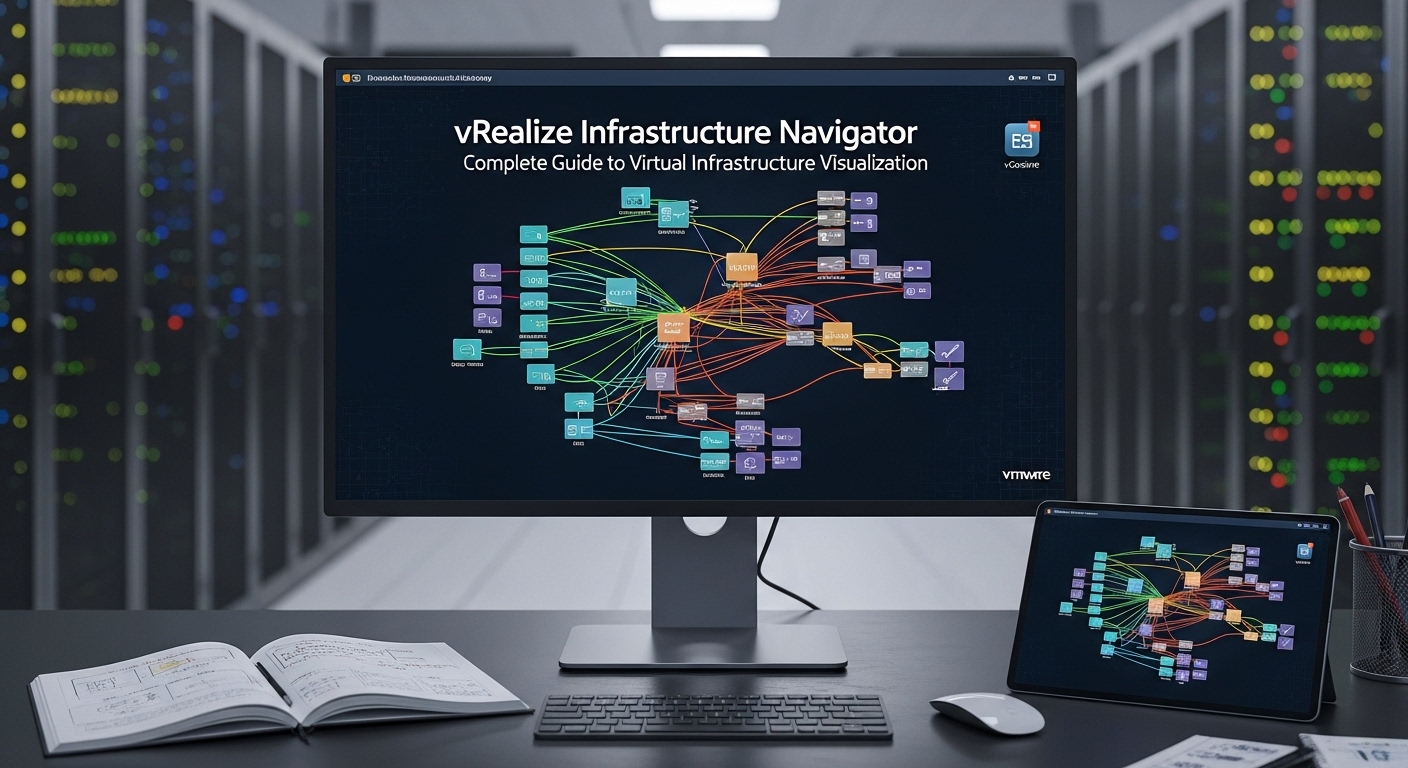
Modern IT environments present increasing complexity as organizations deploy hundreds or thousands of virtual machines across distributed infrastructure components. vRealize Infrastructure Navigator provides comprehensive visualization and dependency mapping capabilities that help administrators understand their virtual environments thoroughly and completely. This powerful VMware solution automatically discovers applications, maps dependencies, and tracks relationships between infrastructure components without manual configuration requirements. Understanding how this tool works enables IT teams to optimize resources, plan migrations, troubleshoot problems, and maintain operational excellence.
Understanding the Core Platform
Purpose and Value Proposition
IT administrators struggle to maintain accurate documentation of complex virtual environments that constantly evolve with new deployments and changes. This solution addresses these challenges by automatically discovering infrastructure components and mapping their relationships in real-time continuously and accurately. Moreover, the platform provides visual representations that make complex relationships intuitive and easy to understand for technical and non-technical stakeholders. Consequently, organizations gain visibility into their environments without investing countless hours in manual documentation efforts that quickly become outdated.
Key Architectural Components
The platform consists of data collectors that gather information from various infrastructure sources including hypervisors, storage systems, and network devices. These collectors communicate with a central server that processes collected data, identifies relationships, and builds comprehensive topology maps automatically. Additionally, the system includes web-based interfaces that present visualizations, reports, and interactive diagrams to users through standard browsers. This architecture enables scalable deployments that can monitor small environments or massive datacenters containing thousands of virtual machines effectively.
Integration with VMware Ecosystem
VMware designed this tool to work seamlessly with vSphere, vCenter Server, and other products within their comprehensive virtualization portfolio. The tight integration enables automatic credential sharing, simplified deployment, and enhanced functionality when combined with other VMware management solutions. Furthermore, the platform leverages existing VMware infrastructure for authentication, security policies, and operational workflows that administrators already understand thoroughly. This cohesive approach reduces learning curves and accelerates time to value for organizations already invested in VMware technologies.
Application Discovery Features
Automatic Detection Capabilities
The system continuously scans virtual environments to identify applications running on virtual machines without requiring agents or manual configuration. Advanced algorithms analyze network traffic, process information, installed software, and service dependencies to accurately identify application components automatically. Moreover, the platform recognizes common enterprise applications like databases, web servers, application servers, and business-critical software packages immediately. This automated discovery eliminates tedious manual inventory processes while ensuring documentation remains current as environments change and evolve constantly.
Application Component Mapping
Beyond identifying individual applications, the tool maps relationships between different components that comprise multi-tier application architectures across environments. Database servers, application servers, web servers, load balancers, and other components connect through clear visual relationships that illustrate dependencies. Additionally, the system tracks communication patterns between components, identifying which services communicate with others and through which network paths. These detailed maps prove invaluable for troubleshooting performance issues, planning maintenance windows, and understanding potential failure impact scenarios thoroughly.
Business Service Representation
Organizations can group related applications and infrastructure components into logical business services that align with organizational objectives and priorities. These business service views provide executive-level perspectives that connect technical infrastructure with actual business outcomes and revenue-generating activities effectively. Furthermore, administrators can track dependencies between business services to understand how infrastructure problems might affect multiple business functions simultaneously. This capability bridges the gap between technical operations and business leadership through shared understanding of infrastructure importance.
Dependency Mapping Capabilities
Network Relationship Visualization
The platform creates detailed network topology diagrams showing how virtual machines, physical servers, storage devices, and network equipment interconnect throughout environments. These visualizations display network segments, VLANs, subnets, and routing relationships that define data paths between infrastructure components clearly and accurately. Moreover, administrators can drill down into specific connections to examine traffic patterns, bandwidth utilization, and communication protocols in greater detail. This network visibility helps troubleshoot connectivity issues, plan network changes, and optimize traffic flows for improved performance across environments.
Storage Dependency Tracking
Understanding storage relationships proves critical for capacity planning, performance optimization, and disaster recovery planning across virtualized environments comprehensively and accurately. The tool maps which virtual machines consume storage from specific datastores, LUNs, and physical storage arrays throughout your infrastructure. Additionally, it tracks storage protocol usage, replication relationships, and backup dependencies that affect data protection strategies and recovery time objectives. These insights help administrators make informed decisions about storage migrations, capacity upgrades, and performance tuning initiatives that affect operations.
Power State Dependencies
The system identifies dependencies related to startup and shutdown sequences, ensuring administrators understand proper procedures for planned maintenance activities. Some applications require specific startup orders where database servers must initialize before application servers that depend on them can function. Similarly, certain virtual machines provide services that other systems require, creating dependencies that affect shutdown planning and disaster recovery procedures. Consequently, this dependency information prevents outages caused by inadvertently powering off infrastructure components that other systems actively require for operation.
Visualization and Reporting Tools
Interactive Topology Views
Web-based interfaces present dynamic topology diagrams that users can manipulate through zooming, filtering, and focusing on specific infrastructure subsets. These interactive visualizations allow administrators to explore environments at different levels of detail, from high-level overviews to granular component relationships. Furthermore, users can highlight specific paths between components, trace network connections, and isolate particular application tiers for focused analysis. This flexibility accommodates different use cases ranging from executive presentations to detailed technical troubleshooting sessions requiring deep infrastructure knowledge.
Customizable Dashboards
Administrators create personalized dashboards that display relevant metrics, alerts, and visualizations for their specific roles and responsibilities within organizations. These dashboards aggregate information from multiple sources, providing single-pane-of-glass views that eliminate the need to access numerous separate tools. Additionally, dashboard layouts accommodate different screen sizes and resolutions, ensuring usability on desktop computers, tablets, and mobile devices effectively. Role-based customization ensures that executives, managers, and technical staff all access information appropriate to their decision-making needs.
Comprehensive Reporting Engine
Built-in reporting capabilities generate detailed documentation about infrastructure configurations, application dependencies, and compliance status automatically on scheduled intervals. Reports can cover entire environments or focus on specific applications, departments, or business services according to organizational requirements flexibly. Moreover, the system exports reports in various formats including PDF, HTML, and CSV for distribution through email, portals, or integration with other management tools. These automated reports reduce administrative overhead while ensuring stakeholders receive timely information for audits, planning, and operational reviews.
Migration Planning Support
Impact Analysis Tools
Before making infrastructure changes, administrators use the platform to analyze potential impacts on dependent applications and services throughout environments. The system identifies all components that might experience disruption from planned maintenance, migrations, or configuration changes before implementation begins. Additionally, impact analysis reveals hidden dependencies that manual documentation might miss, preventing unexpected outages during supposedly routine maintenance windows. This proactive approach minimizes risks associated with infrastructure changes while increasing confidence in change management processes and procedures.
Workload Mobility Assessment
Organizations planning migrations to new infrastructure, cloud platforms, or consolidated datacenters leverage dependency maps to identify logical migration groupings. The tool reveals which applications share dependencies and should migrate together to maintain functionality throughout transition periods effectively. Furthermore, administrators can evaluate resource requirements for migrated workloads to ensure destination environments provide adequate capacity for proper operation. These insights streamline migration planning, reduce migration-related outages, and accelerate overall project timelines by eliminating guesswork from complex undertakings.
Compatibility Verification
The platform helps identify potential compatibility issues before migrations by analyzing application requirements against destination environment capabilities and configurations. Administrators can verify that required network ports remain available, storage protocols are supported, and dependent services exist in target environments. Moreover, the tool highlights configuration differences between source and destination environments that might affect application functionality after migration completes. Addressing these compatibility concerns during planning phases prevents post-migration problems that delay project completion and affect business operations.
Troubleshooting and Problem Resolution
Root Cause Analysis
When problems occur, administrators use dependency maps to trace issues back to their sources rather than addressing symptoms without understanding causes. The platform displays all components connected to malfunctioning applications, helping technicians identify whether problems originate from network, storage, or compute issues. Additionally, historical data reveals when specific dependencies changed, potentially correlating infrastructure modifications with the onset of operational problems recently. This systematic approach reduces mean time to resolution by guiding technicians toward actual problem sources rather than unrelated components.
Performance Bottleneck Identification
Detailed visualizations highlight infrastructure components experiencing high utilization, errors, or performance degradation that might affect dependent applications and services. Administrators can follow dependency chains to understand how problems in individual components cascade through applications affecting multiple business services simultaneously. Furthermore, trending capabilities reveal whether performance issues represent temporary spikes or sustained problems requiring immediate remediation and infrastructure improvements. These insights help prioritize remediation efforts based on actual business impact rather than simply addressing the loudest complaints first.
Change Impact Assessment
The platform tracks infrastructure changes over time, allowing administrators to correlate modifications with subsequent operational problems or performance degradation events. This change tracking proves invaluable when troubleshooting issues that arise shortly after maintenance windows, configuration updates, or new application deployments. Moreover, administrators can review exactly which dependencies existed before changes occurred, helping them understand whether modifications inadvertently affected systems beyond intended scopes. This forensic capability accelerates problem resolution by quickly identifying likely causes based on recent environmental changes throughout infrastructure.
Capacity Planning Applications
Resource Utilization Analysis
Understanding how applications consume computing resources, storage capacity, and network bandwidth enables informed capacity planning decisions that optimize infrastructure investments. The solution aggregates utilization data across virtual machines, physical hosts, storage arrays, and network segments to reveal overall consumption patterns. Additionally, trending capabilities project future resource requirements based on historical growth rates and seasonal usage variations across different time periods. These projections help organizations purchase additional capacity proactively before shortages affect application performance and user satisfaction negatively.
Optimization Opportunities
The platform identifies underutilized infrastructure resources that represent candidates for consolidation, retirement, or reallocation to more demanding workloads elsewhere. Virtual machines consuming minimal resources might consolidate onto fewer hosts, reducing power consumption, cooling requirements, and maintenance overhead throughout datacenters. Similarly, oversized virtual machines receiving resource allocations exceeding their actual requirements present right-sizing opportunities that free capacity for other needs. These optimization insights help organizations maximize return on infrastructure investments while reducing operational expenses through improved resource efficiency.
Growth Forecasting
Historical data combined with dependency information enables accurate forecasting of infrastructure requirements to support business growth and new initiatives. Administrators can model how adding new users, deploying additional application instances, or expanding into new markets affects infrastructure capacity needs. Furthermore, the platform helps quantify infrastructure requirements for specific projects, enabling accurate budget planning and procurement timelines for required hardware. This forward-looking capability ensures organizations can support growth without encountering unexpected capacity constraints that limit business agility.
Security and Compliance Benefits
Network Segmentation Verification
Visual network topologies help security teams verify that proper segmentation exists between different security zones and sensitivity levels throughout environments. The platform reveals whether DMZ systems maintain appropriate isolation from internal networks and whether production and development environments remain properly separated. Additionally, administrators can identify unauthorized communication paths that violate security policies, representing potential vulnerability vectors requiring immediate remediation efforts. This security visibility complements traditional security tools by providing context about infrastructure relationships that might otherwise remain invisible to teams.
Access Path Documentation
Compliance requirements often mandate documentation of network paths between systems handling sensitive data and potential access points from external networks. The solution automatically generates this documentation, showing all possible paths between specified systems and identifying intermediate components along routes. Moreover, updates occur automatically as infrastructure changes, ensuring compliance documentation remains current without manual effort from already-overburdened IT staff. This capability simplifies audit preparation and demonstrates due diligence in maintaining secure infrastructure configurations that protect sensitive information.
Configuration Drift Detection
The platform establishes baseline configurations for applications and infrastructure components, then alerts administrators when actual configurations diverge from approved standards. Configuration drift often occurs gradually through undocumented changes, patches, and troubleshooting efforts that administrators neglect to record in formal documentation. Furthermore, drift detection identifies unauthorized changes that might represent security breaches, policy violations, or simple mistakes requiring correction before problems occur. Maintaining configuration consistency improves security, simplifies troubleshooting, and ensures infrastructure remains in known, supportable states throughout its lifecycle.
Integration Capabilities
Third-Party Tool Connectivity
The platform exposes APIs that enable integration with third-party management tools, ticketing systems, automation platforms, and business intelligence solutions throughout organizations. These integrations allow organizations to incorporate dependency information into existing workflows rather than forcing adoption of completely new processes. Additionally, bidirectional data exchange enables other tools to trigger actions within the platform while consuming visualization and dependency data for enriched analysis. This open approach maximizes the platform’s value by making its insights accessible across the broader IT management toolchain.
Automation Framework Support
Organizations leverage dependency information to create intelligent automation workflows that respect application dependencies and infrastructure relationships during routine operations and maintenance. Automated procedures can reference dependency maps to determine proper startup sequences, validate prerequisite conditions, and verify successful completion before proceeding. Moreover, orchestration tools can query the platform to assess change impacts automatically, preventing unauthorized modifications that might disrupt critical dependencies. This integration between visualization and automation improves operational efficiency while reducing risks associated with automated infrastructure changes.
Best Practices for Deployment
Initial Implementation Planning
Successful deployments begin with clear objectives defining what organizations hope to achieve through increased visibility into their virtual infrastructure environments. Teams should identify specific use cases like migration planning, troubleshooting improvement, or compliance documentation that justify the investment and provide measurable benefits. Additionally, establishing success criteria enables objective evaluation of deployment effectiveness and helps secure continued organizational support for the initiative. This planning foundation ensures implementations address actual business needs rather than simply deploying technology because it seems interesting.
Phased Rollout Strategy
Large organizations benefit from phased deployments that start with pilot groups before expanding coverage across entire infrastructure portfolios systematically and methodically. Initial phases help teams refine configurations, validate integrations, and develop operational procedures before scaling to production-critical environments requiring maximum reliability. Furthermore, phased approaches allow organizations to demonstrate value incrementally, building stakeholder support and securing additional resources for broader deployment efforts. This measured approach reduces risks while allowing teams to learn from early experiences before encountering them at larger scales.
Ongoing Maintenance Requirements
After initial deployment, organizations must maintain the solution through regular updates, periodic audits of discovered information, and continuous refinement of groupings. Collectors require updates to support new infrastructure versions, applications, and protocols as technology environments evolve and vendors release improvements. Additionally, administrators should periodically review discovered applications and dependencies to verify accuracy and correct any misidentifications that automated discovery missed. This ongoing attention ensures the platform remains accurate, valuable, and trusted as the authoritative source for infrastructure relationship information.
Conclusion
Virtual infrastructure complexity continues increasing as organizations adopt cloud computing, containers, microservices, and other modern architectural patterns throughout their environments. This comprehensive visualization and dependency mapping platform helps IT teams understand these complex relationships through automated discovery and intuitive visual representations. Organizations gain unprecedented visibility into their infrastructure dependencies, enabling better decision-making for migrations, troubleshooting, capacity planning, and security initiatives. Moreover, the solution reduces risks associated with infrastructure changes by revealing impacts before modifications occur in production environments. By implementing this powerful tool effectively, organizations transform infrastructure management from reactive firefighting into proactive optimization that supports business objectives.