
 By Kathryn Roqueeto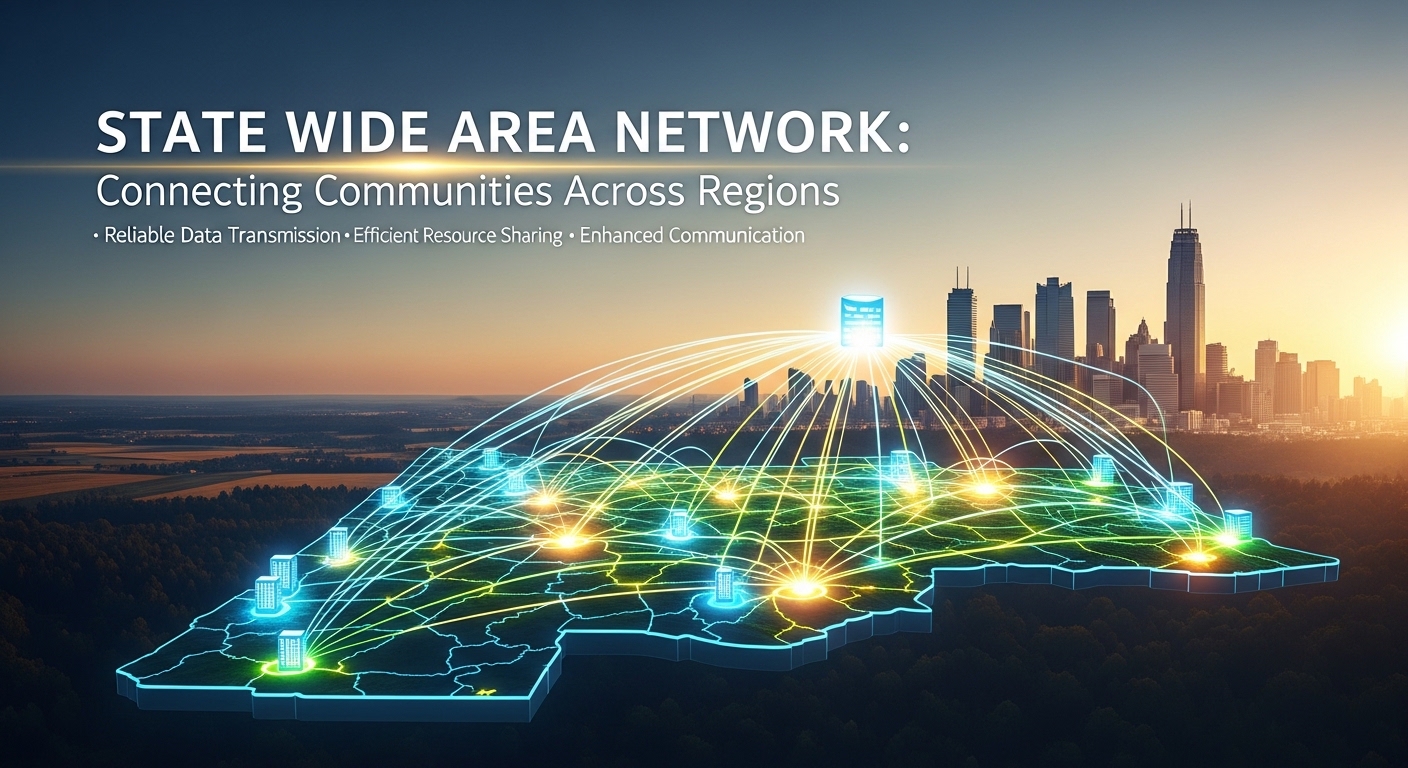
State Wide Area Network: Building Secure Government Connectivity Infrastructure
Government agencies require reliable, secure communication infrastructure that connects departments, offices, and facilities across entire geographic regions. A State Wide Area Network provides this critical connectivity backbone, enabling seamless data exchange between hundreds of government locations simultaneously and securely. This sophisticated networking solution transforms how public sector organizations share information, deliver citizen services, and coordinate emergency responses effectively. Understanding how these networks function helps policymakers, IT professionals, and citizens appreciate their enormous value to modern governance and public administration.
Defining the Core Concept
Fundamental Network Architecture
A statewide government network spans entire states, connecting agencies located in capital cities, regional offices, rural outposts, and remote facilities. Unlike corporate networks serving single organizations, these systems must accommodate dozens of different agencies with varying technical requirements and security needs. Moreover, the infrastructure must reliably serve thousands of simultaneous users performing diverse functions ranging from routine administrative tasks to critical emergency communications. This breadth of requirements makes designing and operating these networks extraordinarily challenging compared to typical enterprise networking projects.
Historical Development Context
Early government communication relied on dedicated leased telephone lines that proved expensive, slow, and difficult to manage across large geographic territories. State governments began consolidating their communication infrastructure during the 1990s as digital networking technologies matured and internet protocols gained widespread adoption. Furthermore, the push toward electronic government services created urgent demands for faster, more reliable connectivity between agencies and citizens seeking digital service delivery. These converging pressures drove investments in modern networking infrastructure that could support ambitious digital transformation initiatives throughout state governments.
Governance and Ownership Models
Different states adopt varying approaches to owning, operating, and managing their government-wide networking infrastructure across diverse organizational structures. Some states operate fully government-owned networks using state employees to manage all technical infrastructure and service delivery activities. In contrast, other states contract with commercial telecommunications providers to build and operate networks under long-term service agreements with defined performance standards. Additionally, hybrid models combine government ownership of critical backbone infrastructure with commercial services for certain connectivity types and geographic areas.
Technical Infrastructure Components
Backbone Network Design
The network backbone forms the high-capacity foundation that carries traffic between major hub locations distributed strategically across the state’s geography. Fiber optic cables typically provide backbone connectivity due to their exceptional bandwidth capacity, reliability, and security characteristics compared to alternatives. Moreover, redundant paths ensure that traffic automatically reroutes around failures, maintaining connectivity even when individual links or network nodes experience problems. This resilient backbone design ensures government operations continue functioning during infrastructure failures, natural disasters, and other disruptive events affecting specific network segments.
Distribution Layer Architecture
Below the backbone, distribution layers connect regional hub locations to local offices, courthouses, health departments, and other government facilities throughout their service areas. These distribution networks aggregate traffic from multiple local sites before forwarding it onto high-capacity backbone links for transport across the state. Additionally, distribution layer equipment performs important functions like traffic prioritization, access control, and network monitoring that protect overall network performance and security. This hierarchical design allows efficient management of thousands of connected locations through a manageable number of regional aggregation points.
Access Layer Connectivity
Individual government facilities connect to the network through various access technologies chosen based on location, bandwidth requirements, and available infrastructure in specific areas. Urban offices typically receive high-speed fiber connections delivering gigabit-level bandwidth that supports modern multimedia applications and large data transfers. Meanwhile, rural locations may use wireless technologies, cable services, or DSL connections where fiber infrastructure doesn’t yet reach economically or practically. Consequently, access layer diversity requires sophisticated management tools that handle multiple connection types while delivering consistent service quality to all users regardless of technology.
Equipment and Hardware Standards
Standardizing network equipment across the infrastructure reduces complexity, simplifies management, and enables bulk purchasing that achieves significant cost savings for governments. Most statewide networks specify preferred vendor equipment lists that agencies must use when connecting facilities or upgrading local infrastructure components. Furthermore, standardization enables technicians trained on specific equipment to work effectively at any location throughout the network without extensive retraining requirements. This consistency proves invaluable when responding to outages, as technicians understand exactly what equipment they’ll encounter at any facility they visit.
Security Framework
Defense-in-Depth Approach
Protecting government networks requires multiple overlapping security layers that together prevent, detect, and respond to threats targeting sensitive public sector data. Firewalls, intrusion detection systems, content filtering, and access controls each provide different protection functions that complement each other throughout network infrastructure. Moreover, security teams continuously monitor network traffic for anomalies indicating unauthorized access attempts, data exfiltration, or malware activity requiring immediate response. This comprehensive approach ensures that attackers who bypass one security layer encounter additional obstacles that prevent successful compromise of sensitive systems.
Network Segmentation Strategies
Dividing the network into isolated segments prevents security incidents in one area from spreading to affect other government systems and applications. Agencies handling particularly sensitive data like law enforcement records, tax information, or health data operate within specially hardened network segments with stricter access controls. Additionally, public-facing systems that interact with citizens through web portals reside in demilitarized zones isolated from internal government networks handling sensitive administrative functions. These segmentation strategies contain potential breaches while allowing necessary communication between different government systems and services.
Encryption Requirements
All sensitive data traveling across government networks requires strong encryption that protects information from interception by unauthorized parties during transit. Virtual private network technologies create encrypted tunnels that secure communications between geographically separated government locations over shared network infrastructure. Furthermore, encryption standards must meet federal guidelines and state security policies that define minimum acceptable cryptographic algorithms and key lengths. As quantum computing advances threaten current encryption approaches, network security teams must prepare migration strategies toward quantum-resistant algorithms that remain secure into the future.
Access Control Management
Strict controls govern which users, devices, and systems can access different network segments and the sensitive resources they contain. Identity management systems authenticate users through multi-factor methods requiring both passwords and secondary verification factors like hardware tokens or mobile applications. Similarly, network access control systems verify that connecting devices meet security requirements including updated software, active antivirus protection, and proper configuration before granting network access. These controls ensure only authorized users operating compliant devices can access government network resources and sensitive information systems.
Service Delivery Capabilities
Voice Communication Services
Modern government networks carry voice communications using voice-over-IP technology that replaces traditional telephone systems with more flexible digital alternatives. These systems enable agencies to communicate affordably across state networks without incurring per-minute charges that accumulate significantly when thousands of employees make frequent calls. Moreover, unified communications features like video conferencing, instant messaging, and presence information improve collaboration between geographically distributed government teams dramatically. Consequently, agencies reduce travel expenses and improve responsiveness by meeting virtually rather than requiring all participants to travel to central locations.
Video Conferencing Infrastructure
High-quality video conferencing capabilities transform how government conducts business, enabling face-to-face interactions between officials located hundreds of miles apart. Courts use video systems to conduct hearings with remote participants, reducing transportation costs and improving access to justice for people in rural areas. Additionally, state agencies conduct training sessions, staff meetings, and legislative briefings through video connections that reach participants throughout the state simultaneously. This capability proves especially valuable during emergencies when in-person gatherings become impossible or when rapid decision-making requires immediate participation from widely dispersed officials.
Data Transfer and Storage Services
Agencies routinely share large datasets including maps, imaging files, databases, and multimedia content that require substantial bandwidth for timely transfer between locations. The network provides fast, reliable pathways for these transfers that enable real-time collaboration on data-intensive projects across different agency locations. Furthermore, centralized storage services allow agencies to store critical data in secure datacenters rather than maintaining local servers that require individual management and protection efforts. This centralization improves data backup, disaster recovery capabilities, and security while reducing the technical burden on individual agency IT staff.
Emergency Communication Support
Statewide networks play absolutely critical roles during natural disasters, public health emergencies, and other crisis situations requiring coordinated multi-agency responses. Emergency management agencies use network infrastructure to share situational awareness data, coordinate resource deployment, and communicate with field teams operating throughout affected areas. Additionally, redundant network paths and backup power systems ensure communications continue functioning even when portions of the infrastructure suffer physical damage during disasters. This resilience often means the difference between coordinated, effective emergency responses and chaotic situations where agencies lack information to act decisively.
Agency Connectivity and Integration
State Agency Connections
Every major state agency maintains network connections that enable employees to access shared systems, collaborate with colleagues, and deliver services to citizens effectively. Central departments like revenue, transportation, health, education, and public safety each have specific connectivity requirements reflecting their unique operational characteristics and data volumes. Moreover, agencies increasingly share data with each other to improve service delivery, reduce duplication, and enable whole-government approaches to complex policy challenges. This interconnection requires careful planning to ensure appropriate access while maintaining security boundaries between agencies handling different sensitivity levels of information.
Local Government Integration
Counties, municipalities, and special districts often connect to statewide networks to access state systems, share data, and benefit from shared infrastructure investments. Local law enforcement agencies connect to state criminal justice information systems that provide access to statewide databases supporting investigations and public safety operations. Additionally, county health departments access state health information systems for disease surveillance, vital records, and public health program administration functions. Furthermore, local governments benefit from reduced networking costs when they leverage state infrastructure rather than procuring expensive dedicated connections independently.
Federal System Connections
State networks maintain carefully managed connections to federal government systems that enable sharing of information critical to numerous program areas and public services. Medicaid programs exchange data with federal systems to verify eligibility, process claims, and ensure program integrity across state and federal responsibilities. Similarly, state employment agencies connect with federal unemployment insurance systems, Social Security Administration databases, and workforce development program management platforms. These federal connections require compliance with stringent federal security standards that protect sensitive program data while enabling necessary information sharing across jurisdictional boundaries.
Private Sector Partnerships
Certain government functions require secure connectivity with private sector organizations including healthcare providers, financial institutions, and critical infrastructure operators. Electronic payment processors connect with government financial systems to enable citizens to pay taxes, fees, and other obligations through convenient digital channels. Moreover, healthcare information exchanges link government public health systems with private hospitals and clinics that report disease data and participate in coordinated care initiatives. These public-private connections require contractual agreements establishing security requirements, data handling standards, and liability frameworks that protect government and citizens.
Cost Management and Efficiency
Economies of Scale Benefits
Consolidating networking services across all state agencies creates purchasing power that achieves dramatically better pricing than individual agencies could negotiate independently. A single statewide contract for internet bandwidth, managed services, or equipment typically costs far less per unit than dozens of separate agency contracts. Additionally, shared infrastructure eliminates duplicate investments where multiple agencies would otherwise each purchase similar equipment serving overlapping geographic areas. Consequently, states routinely achieve substantial cost reductions through consolidation while simultaneously improving service quality, reliability, and security beyond what individual agencies could afford separately.
Centralized Management Advantages
Operating network infrastructure as a centralized service enables specialized expertise to serve all agencies rather than duplicating technical staff across each department separately. A centralized network operations center staffed around the clock provides monitoring, troubleshooting, and incident response capabilities that no individual agency could economically maintain independently. Furthermore, centralized procurement, vendor management, and contract administration reduce administrative overhead while enabling consistent technology standards across the entire government enterprise. These efficiency gains free agency IT staff to focus on business-specific applications and user support rather than complex network infrastructure management tasks.
Technology Refresh Cycles
Centralized governance enables systematic planning for technology refresh cycles that prevent infrastructure from becoming obsolete before replacement occurs at appropriate intervals. Annual budgeting processes can incorporate predictable equipment replacement schedules based on vendor support timelines and technology evolution roadmaps. Additionally, centralized planning coordinates refreshes to minimize disruption, ensure compatibility between upgraded and existing components, and capture savings available when replacing multiple systems simultaneously. This disciplined approach prevents the deferred maintenance cycles that plague decentralized environments where individual agencies delay upgrades due to immediate budget pressures.
Implementation Challenges
Geographic Coverage Complexity
Connecting government facilities distributed across urban centers, small towns, and remote rural areas presents significant technical and financial challenges for planners and implementers. Commercial telecommunications providers often lack adequate infrastructure in rural areas, forcing governments to consider alternatives like building their own infrastructure or subsidizing commercial expansion. Moreover, mountainous terrain, vast distances, and sparse populations in certain regions create engineering challenges that increase construction costs substantially beyond typical estimates. Furthermore, these geographic realities mean achieving universal connectivity requires creative solutions including satellite technologies, microwave links, and wireless broadband where traditional options prove impractical or unaffordable.
Legacy System Integration
Many government agencies operate aging applications that predate modern networking technologies and require specialized connectivity approaches to function properly over contemporary networks. These legacy systems may use outdated protocols, require specific network configurations, or depend on technologies that modern infrastructure doesn’t natively support without additional adaptation layers. Additionally, agencies often lack documentation for older systems, making it difficult to understand all connectivity requirements before attempting integration with new infrastructure. Therefore, successful modernization requires careful compatibility testing and sometimes developing custom solutions that bridge older application requirements with modern network capabilities.
Procurement and Contracting Obstacles
Government procurement processes move slowly due to legal requirements for competitive bidding, extensive vendor evaluation, and multiple approval levels that delay contract awards significantly. Technology evolves rapidly enough that procurement processes begun several years before deployment may result in purchasing approaches already becoming outdated before implementation completes. Furthermore, writing technical specifications that attract qualified vendors while remaining technology-neutral enough to encourage innovation requires specialized expertise that many government procurement offices lack. Consequently, states increasingly explore alternative procurement vehicles like existing contracts and cooperative purchasing agreements that accelerate acquisition while maintaining competitive pricing.
Organizational Change Management
Technical implementation represents only part of successful statewide network projects, as organizational and cultural challenges often prove equally or more difficult. Agencies accustomed to controlling their own IT infrastructure may resist consolidation efforts that transfer decision-making authority to central organizations they view skeptically. Additionally, employees whose jobs currently involve managing agency-specific networks may worry about career impacts from centralization that reduces demand for distributed technical expertise. Moreover, standardization requirements that limit agency choices conflict with departmental preferences for specific technologies or vendors that existing relationships and expertise support. Therefore, successful programs invest heavily in stakeholder engagement, communication, and change management alongside technical implementation activities.
Performance Monitoring and Management
Network Operations Center Functions
Centralized monitoring facilities observe network performance continuously, detecting problems and initiating responses before users notice significant service degradation. Advanced monitoring systems collect thousands of performance metrics per second from throughout the network, enabling rapid identification of developing issues before they become major outages. Furthermore, experienced engineers staff these centers around the clock, providing human judgment that automated systems cannot fully replace when complex situations require nuanced interpretation and creative problem-solving. This continuous vigilance ensures government services remain available when citizens and employees need them, regardless of time or day.
Service Level Agreement Enforcement
Formal agreements define minimum performance standards for network availability, latency, bandwidth, and other metrics that providers must consistently achieve and maintain. Automated monitoring systems continuously measure actual performance against these contractual commitments, generating alerts when performance falls below required thresholds. Additionally, regular reporting provides government leadership with objective evidence about whether network investments deliver promised value and whether vendors meet their contractual obligations. Consequently, these accountability mechanisms ensure providers maintain appropriate focus on service quality rather than allowing performance to gradually degrade after contract award ceremonies.
Capacity Planning Processes
Continuous analysis of bandwidth utilization trends enables proactive capacity additions before congestion affects government operations and citizen service delivery quality. Network engineers study traffic patterns to identify emerging bottlenecks, predict when existing capacity will reach utilization thresholds, and plan upgrades with appropriate lead times. Furthermore, new agency initiatives, application deployments, and user growth projections inform capacity planning models that anticipate future requirements before current infrastructure becomes constraining. This forward-looking approach prevents the reactive capacity additions that occur when performance problems affect users before planners recognize growing demand.
Future Developments and Trends
Cloud Integration Evolution
Government networks increasingly serve as on-ramps to cloud computing platforms that agencies adopt for application hosting, storage, and disaster recovery capabilities. Direct cloud connectivity options bypass the public internet, providing more reliable, secure, and performant access to cloud services that agencies increasingly depend upon. Moreover, software-defined networking technologies enable dynamic reconfiguration of network paths based on application requirements, security policies, and changing traffic patterns automatically. Consequently, networks evolve from static infrastructure into flexible platforms that intelligently direct traffic based on sophisticated policies rather than simple static routing configurations.
Internet of Things Expansion
Government agencies deploy increasing numbers of connected sensors, cameras, environmental monitors, and smart city devices that generate enormous data volumes requiring network transport. Traffic cameras, air quality sensors, building management systems, and utility meters all connect through government networks to centralized management and analytics platforms. Additionally, public safety agencies deploy body cameras, vehicle tracking systems, and gunshot detection sensors that continuously transmit data requiring reliable, low-latency network connectivity. These IoT deployments create new capacity requirements and security challenges that network planners must address through forward-thinking architecture decisions and security frameworks.
Artificial Intelligence Applications
Network management increasingly leverages artificial intelligence tools that analyze performance patterns, predict failures, detect security threats, and optimize configurations automatically. Machine learning algorithms can identify anomalous traffic patterns indicating security incidents far faster than human analysts reviewing dashboards and alert queues alone. Furthermore, AI-driven capacity planning tools analyze complex relationships between application usage, user behavior, and network performance that exceed human ability to process manually. These capabilities enable smaller operations teams to manage increasingly complex networks while actually improving service quality and security outcomes simultaneously.
Policy and Governance Framework
Oversight and Accountability Structures
Effective governance requires clear authority over network policies, standards, and investment decisions that balance central control with agency flexibility and autonomy. Most states establish central IT agencies or offices that bear responsibility for statewide network governance while working collaboratively with agency CIOs on implementation details. Moreover, advisory committees representing diverse agency interests provide input on priorities, standards, and service offerings that ensure the central network meets actual agency needs effectively. This governance structure creates accountability for performance while building the stakeholder engagement necessary for successful adoption across diverse agency cultures.
Legislative and Regulatory Compliance
Government networks must comply with numerous laws, regulations, and standards governing data security, privacy protection, accessibility, and procurement processes at state and federal levels. Federal programs funding network infrastructure often attach specific technical and operational requirements that states must satisfy to remain eligible for financial support. Additionally, state legislatures enact laws governing data breach notification, public records access, and privacy protection that affect how networks handle and protect government information. Therefore, compliance programs must continuously monitor regulatory changes and assess impacts on network policies, security controls, and operational procedures throughout the infrastructure lifecycle.
Conclusion
Statewide government networks represent essential infrastructure investments that enable modern public administration, efficient service delivery, and effective emergency response capabilities. These sophisticated systems connect thousands of government facilities, support millions of citizen interactions, and protect sensitive information that government agencies hold in trust for the public. Moreover, well-designed and properly managed networks create substantial cost savings through consolidation while simultaneously improving the quality, reliability, and security of government connectivity services. As technology continues evolving rapidly, statewide networks must adapt through thoughtful planning, adequate investment, and strong governance frameworks that balance innovation with stability. Organizations that understand and invest in this critical infrastructure position themselves to serve citizens effectively in an increasingly digital world.