
 By Kathryn Roqueeto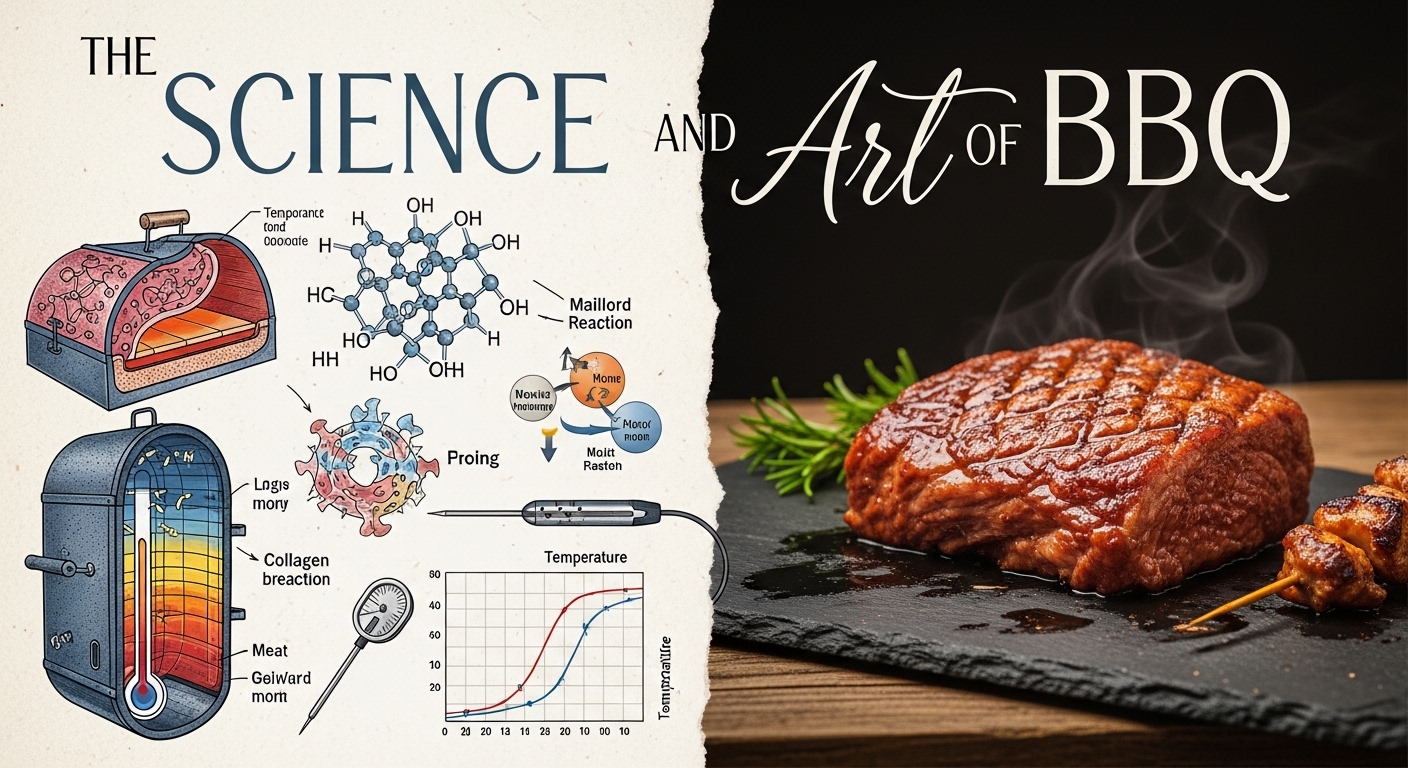
Introduction: Where Passion Meets Precision
The science and art of BBQ represents one of humanity’s oldest and most satisfying cooking traditions. Furthermore, it blends chemistry, patience, and pure instinct into something truly remarkable. Every pitmaster, whether a weekend hobbyist or seasoned professional, discovers that great BBQ demands both knowledge and feel. Therefore, understanding what happens inside the smoker changes everything about how you cook.
The Chemistry Behind Great Barbecue
The Maillard Reaction: Your Best Friend at the Grill
Heat triggers a powerful chemical process between amino acids and sugars on meat surfaces. Consequently, this reaction creates hundreds of complex flavor compounds that define that irresistible crust. Temperatures between 280°F and 330°F encourage the Maillard reaction most efficiently on your grill. As a result, you get that deep, mahogany bark that every serious cook chases relentlessly.
Understanding Collagen and Fat Breakdown
Tough cuts like brisket and pork shoulder contain enormous amounts of collagen and connective tissue. However, low-and-slow cooking between 190°F and 210°F converts collagen into rich, silky gelatin over time. This transformation, moreover, gives great BBQ its signature melt-in-your-mouth texture that nobody forgets. Fat also renders slowly, basting the meat internally and building layers of juicy, complex flavor.
The Role of Smoke Chemistry
Wood smoke carries over 100 chemical compounds that land on meat surfaces during the cooking process. Specifically, guaiacol and syringol give smoked meat that distinctive, woody aroma everyone loves deeply. Furthermore, the smoke ring — that pink layer just beneath the surface — forms when nitric oxide penetrates the meat fibers. Consequently, many judges and enthusiasts treat the smoke ring as a visual badge of authentic, skilled cooking.
Choosing the Right Wood for Maximum Flavor
Hardwoods vs. Softwoods: A Critical Distinction
Hardwoods like oak, hickory, apple, and cherry produce clean, flavorful smoke perfect for serious BBQ. In contrast, softwoods like pine and cedar release resins that create harsh, bitter, unpleasant smoke on food. Therefore, every smart cook builds a hardwood collection and experiments to find personal favorites over time. Additionally, the moisture content of the wood affects how cleanly and consistently it burns throughout the cook.
Matching Wood to Meat
Different meats pair beautifully with specific wood varieties based on intensity and flavor profile. For example, bold hickory and mesquite complement beef brisket and pork ribs in deeply satisfying ways. Meanwhile, fruit woods like apple and cherry bring a gentle sweetness that enhances chicken and pork perfectly. Furthermore, combining woods — like oak for structure and cherry for sweetness — creates genuinely complex smoke flavor.
Mastering Heat: The Heart of BBQ Technique
Direct vs. Indirect Heat Explained
Direct heat positions food directly above the fire for fast searing and caramelization on thin cuts. Conversely, indirect heat surrounds the meat with warm air, cooking it slowly without burning the exterior. Most great BBQ relies on indirect heat for the majority of the cooking process and time. Then, finally, a quick sear over direct heat develops the crust right before serving the finished product.
Managing Temperature Zones
Experienced pitmasters create multiple temperature zones across their grill or smoker cooking surface. Specifically, a hot zone handles searing while a cooler zone allows gentle, controlled finishing without risk. Therefore, moving food between zones gives the cook precise control over the cooking rate at all times. Additionally, keeping a reliable thermometer in the cooking chamber eliminates the dangerous guesswork that ruins meals.
The Importance of Resting Meat
Resting cooked meat after pulling it from the heat matters far more than most beginners initially realize. During rest, muscle fibers relax and reabsorb juices that heat had pushed toward the center during cooking. Consequently, a rested brisket slices far more cleanly and stays dramatically juicier than one cut immediately. Therefore, wrapping finished meat in butcher paper and resting it for at least one hour rewards patience generously.
The Art of the Rub and the Marinade
Building a Great Dry Rub
A dry rub creates the foundation of flavor that defines the entire personality of smoked meat. Salt draws moisture to the surface, dissolving the rub and allowing it to penetrate deeper into the fibers. Furthermore, sugar encourages caramelization and bark development when it contacts the consistent, steady heat of the smoker. Spices like cumin, paprika, and black pepper add aromatic depth that smoke then transforms into something extraordinary.
When to Use Marinades vs. Dry Rubs
Marinades work best on thinner cuts like chicken thighs, skirt steak, and pork tenderloin for maximum effect. In contrast, dry rubs suit thick, tough cuts because the salt needs time to work deep into the dense muscle. Additionally, acidic marinades containing citrus or vinegar can tenderize the outermost layers of meat before cooking begins. However, over-marinating in high-acid solutions turns meat mushy rather than tender, so timing always matters critically.
Pitmaster Secrets Most Beginners Miss
The Stall: Patience Is the Real Skill
Every beginner panics when the internal meat temperature stops rising around 150°F to 165°F during the cook. This phenomenon, known as the stall, occurs because evaporating surface moisture cools the meat as fast as heat enters. Consequently, the temperature plateau can last two to six hours, testing the patience of every new cook. Therefore, experienced pitmasters trust the process, maintain steady temperature, and resist the urge to increase heat.
The Texas Crutch: Wrapping for Victory
Wrapping meat tightly in butcher paper or foil during the stall dramatically speeds up the final cooking time. Furthermore, butcher paper allows some moisture to escape, preserving the bark far better than foil alternatives. Foil, on the other hand, creates a brasier environment that softens the bark but produces extremely tender results. Consequently, the choice between paper and foil depends entirely on whether bark or tenderness ranks higher in priority.
Spritz Techniques for Better Bark
Many skilled cooks spritz their meat every 45 to 60 minutes with apple juice, vinegar, or water solutions. Consequently, the added surface moisture slows bark development slightly, allowing more smoke to absorb before the crust sets. Additionally, evaporation keeps the surface temperature lower, which encourages a longer cook and more tender result. Therefore, spritzing rewards patience and creates that gorgeous, lacquered exterior that competition pitmasters proudly display.
Regional BBQ Styles: A Brief Tour of American Tradition
Texas BBQ: Beef and Simplicity
Texas BBQ celebrates the natural flavor of beef brisket with nothing more than salt, pepper, and smoke. Additionally, Texas-style cooking emphasizes the quality of the wood and the skill of managing temperature over many hours. The result stands tall on its own without heavy sauce or elaborate seasoning combinations masking the core flavor. Furthermore, Central Texas BBQ joints like those in Lockhart serve as pilgrimage destinations for enthusiasts from around the world.
Kansas City BBQ: Sauce as Identity
Kansas City pitmasters celebrate an enormous variety of meats all finished with thick, sweet, tomato-based sauces. Moreover, burnt ends — the caramelized, twice-smoked brisket point pieces — originated in Kansas City and now define it completely. Consequently, KC-style BBQ balances the smokiness of slow cooking with the richness of molasses-forward finishing sauces beautifully. Furthermore, the city hosts some of the most competitive and celebrated BBQ competitions anywhere in the entire country.
Carolina BBQ: Vinegar and Tradition
Eastern Carolina BBQ uses whole hog cooking and finishes with a sharp, bright, vinegar-and-pepper sauce. In contrast, Western Carolina adds tomato to the base, creating a slightly richer sauce with a gentler acidic kick. Therefore, the regional divide runs deep and carries enormous cultural pride for communities throughout the state. Additionally, Carolina-style BBQ emphasizes the smoke and the pig above all else, keeping flavors clean and unapologetically bold.
Building Your BBQ Setup: Tools That Actually Matter
The Smoker: Choosing Your Weapon
Offset smokers, kettle grills, ceramic kamado cookers, and pellet smokers each deliver meaningfully different cooking experiences. Furthermore, offset smokers demand the most attention but reward serious cooks with unmatched control over heat and smoke. Conversely, pellet smokers automate much of the process, making consistent results more accessible to busy beginners starting out. Therefore, matching the smoker style to your lifestyle, patience level, and ambition makes all the difference long-term.
Essential Tools Every Serious Cook Needs
A dual-probe digital thermometer ranks as the single most important tool in any serious BBQ cook’s arsenal. Additionally, a quality chimney starter eliminates lighter fluid and produces clean, consistent coals every single time reliably. Furthermore, long-handled tongs, a sharp slicing knife, and heat-resistant gloves complete the essential toolkit for confident cooking. Consequently, investing in these core tools early saves countless frustrating experiences and ruined cooks down the road.
Conclusion: BBQ as a Lifelong Journey
Great BBQ never arrives at a final destination because the learning never truly stops for passionate cooks. Furthermore, every cook, every piece of meat, and every fire teaches something new and worthwhile about the craft. The science and art of BBQ rewards curiosity, patience, and the willingness to embrace both success and failure equally. Therefore, fire up the smoker, trust the process, and enjoy every delicious, smoke-filled moment of the remarkable journey ahead.