
 By Kathryn Roqueeto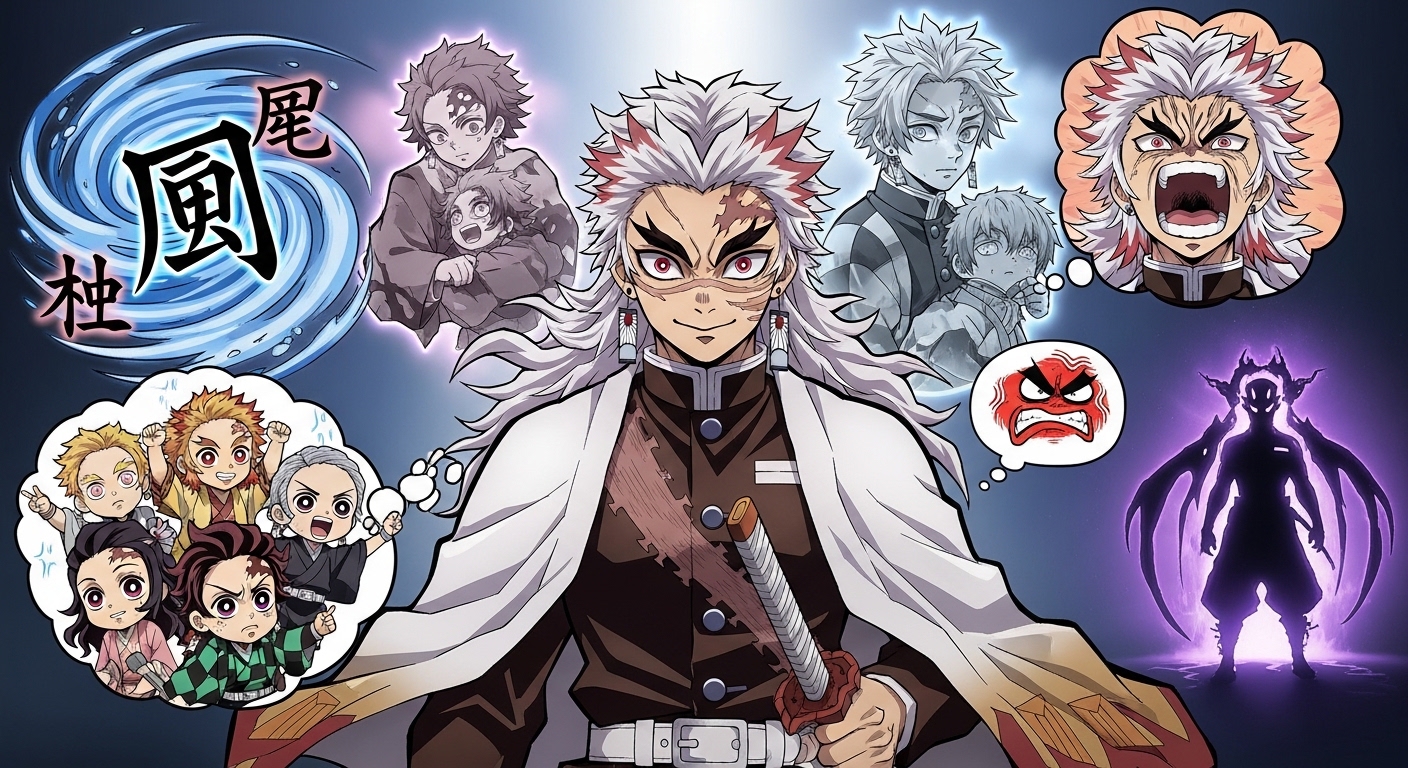
Introduction: The Character Who Earns Every Bit of Fan Love
Sanemi Shinazugawa stands as one of the most compelling and passionately discussed characters in the entire Demon Slayer universe. Furthermore, fans who initially dismissed him as an aggressive and unlikable antagonist found themselves completely reversing their opinions over time. Consequently, Sanemi Shinazugawa fan-favorite status grew steadily as the series revealed the painful truths behind his harsh exterior. Moreover, his combat brilliance, emotional complexity, and fierce loyalty create a character profile that resonates deeply with audiences worldwide. Therefore, understanding exactly why fans love Sanemi so intensely requires examining the five most powerful dimensions of his extraordinary character.
Background: Who Is Sanemi Shinazugawa?
The Wind Hashira of the Demon Slayer Corps
Sanemi Shinazugawa serves as the Wind Hashira, one of the nine most powerful swordsmen within the Demon Slayer Corps. Furthermore, he earned this elite rank through relentless training, natural talent, and a burning personal motivation to destroy every demon alive. Additionally, his distinctive appearance features wild white hair, a heavily scarred body, and fierce eyes that immediately communicate danger. Moreover, Sanemi wields Wind Breathing techniques with a speed and ferocity that even fellow Hashira acknowledge with genuine respect. Consequently, his position as Wind Hashira reflects not just skill but an almost supernatural level of combat dedication and physical endurance.
First Impressions Versus True Character
Many viewers formed strongly negative first impressions of Sanemi during his provocative confrontation with Nezuko early in the series. Furthermore, his deliberate attempt to provoke Nezuko into attacking him struck audiences as needlessly cruel and antagonistic behavior. Additionally, his open hostility toward Tanjiro and dismissiveness toward fellow Hashira painted him as an obstacle rather than an ally. Moreover, creator Koyoharu Gotouge designed this initial presentation intentionally to maximize the emotional impact of later character revelations. Therefore, Sanemi’s journey from apparent villain to beloved hero represents one of shonen manga’s most skillfully executed character reversals.
Reason 1: His Tragic Backstory Reframes Everything
A Childhood Defined by Loss and Survival
Sanemi Shinazugawa endured one of the most devastating childhoods depicted anywhere in the Demon Slayer narrative. Furthermore, he grew up in extreme poverty with six younger siblings and parents whose relationship involved serious domestic violence. Additionally, his father died at another person’s hands, leaving his mother to care for seven children entirely alone. Moreover, tragedy struck most catastrophically when his mother turned into a demon and attacked her own children in the night. Consequently, young Sanemi made the unthinkable decision to fight and kill the demon, not yet knowing it was his own mother.
The Guilt That Shapes His Entire Personality
Sanemi’s brother Genya survived that night but witnessed Sanemi standing over their mother’s body with a blade. Furthermore, Genya screamed accusations at Sanemi without understanding the impossible circumstances that forced his brother’s terrible decision. Additionally, this moment of profound misunderstanding between brothers drove a painful wedge that defined both characters’ trajectories. Moreover, Sanemi carried the weight of his mother’s death and brother’s hatred silently for years without seeking sympathy. Consequently, his aggressive exterior functions as emotional armor protecting wounds so deep that even fellow Hashira never fully glimpse them.
Why This Backstory Resonates So Powerfully With Fans
Fans connect intensely with characters whose harshness traces back to genuine trauma rather than simple cruelty or selfishness. Furthermore, Sanemi’s backstory reframes every aggressive outburst as the behavior of someone who lost everything before adulthood began. Additionally, his refusal to burden others with his pain while silently carrying enormous grief earns deep audience admiration. Moreover, the universality of misunderstood sacrifice makes his relationship with Genya emotionally accessible even to viewers without similar experiences. Therefore, Sanemi’s tragic origin story transforms him from an irritant into one of the series’ most emotionally resonant figures.
Reason 2: His Combat Style Is Visually and Technically Spectacular
Wind Breathing Techniques and Their Devastating Beauty
Sanemi’s Wind Breathing style delivers some of the most visually dynamic and technically impressive combat sequences in Demon Slayer. Furthermore, his techniques combine extraordinary speed with wide slashing arcs that generate powerful air pressure attacks. Additionally, Wind Breathing’s ninth form, Idaten Typhoon, showcases a spinning aerial assault of breathtaking acrobatic complexity. Moreover, the animation studio ufotable rendered Sanemi’s combat sequences with particular visual lavishness that fans consistently highlight. Consequently, every major Sanemi battle becomes an event that viewers rewatch repeatedly to appreciate its full technical and artistic glory.
Rare Blood Type as a Natural Weapon
Sanemi possesses an extremely rare blood type called marechi that acts as a powerful intoxicant to demons. Furthermore, demons who smell or consume his blood experience disorientation and weakened judgment that compromises their combat effectiveness. Additionally, Sanemi weaponizes this biological quirk deliberately by deliberately opening his own wounds during battle. Moreover, this tactic adds a uniquely personal and visceral dimension to his fighting style that no other Hashira replicates. Therefore, Sanemi fights not just with extraordinary skill but with his very biology, making him a genuinely unique threat to demonkind.
Performance Against Kokushibo, the Upper Moon One
Sanemi’s battle against Kokushibo, the most powerful Upper Moon demon, demonstrated his capabilities at their absolute peak. Furthermore, he engaged the demon who had survived and killed countless Hashira across centuries of relentless combat. Additionally, Sanemi sustained catastrophic injuries during the fight yet continued pressing his attack with terrifying determination. Moreover, his performance alongside Gyomei Himejima earned acknowledgment from Kokushibo himself as among the finest swordsmanship he had encountered. Consequently, this battle cemented Sanemi’s position not just as a strong Hashira but as one of humanity’s greatest weapons against demonic threats.
Reason 3: His Relationship With Genya Delivers the Series’ Most Emotional Moments
Brothers Separated by Misunderstanding and Pain
The fractured relationship between Sanemi and his younger brother Genya provides Demon Slayer’s most quietly heartbreaking emotional thread. Furthermore, Genya spent years hating Sanemi for a decision that actually saved his life on the worst night of their childhood. Additionally, Sanemi reinforced this separation by harshly driving Genya away from the Demon Slayer Corps entrance exam. Moreover, fans who understood Sanemi’s motivation recognized this cruelty as desperate protectiveness rather than genuine contempt or indifference. Consequently, every scene between the brothers carries enormous emotional weight invisible to characters within the story but fully visible to readers.
Sanemi’s Secret Protectiveness Toward His Brother
Sanemi actively wanted Genya to abandon demon slaying and live a safe, ordinary life far from mortal danger. Furthermore, he understood better than anyone how brutal and unforgiving the path of a demon slayer truly becomes. Additionally, driving Genya away with harsh words represented the only tool Sanemi believed could protect his only surviving family member. Moreover, watching Genya persist despite rejection revealed a stubbornness and determination that unconsciously mirrored Sanemi’s own personality. Therefore, their parallel natures make their estrangement feel simultaneously tragic and inevitable in ways that deepen audience emotional investment enormously.
The Devastating Payoff of Their Reconciliation
Without revealing every detail, the resolution of Sanemi and Genya’s relationship during the final arc delivers extraordinary emotional payoff. Furthermore, the accumulated weight of years of misunderstanding, sacrifice, and silent love crashes into a single devastating narrative moment. Additionally, Sanemi’s reaction to his brother’s fate ranks among the most emotionally shattering scenes in the entire Demon Slayer series. Moreover, fans who understood the brothers’ full history experienced this moment with an intensity that casual viewers could not entirely access. Consequently, investing in Sanemi’s character arc rewards readers and viewers with one of shonen storytelling’s most genuinely affecting emotional conclusions.
Reason 4: His Fierce Loyalty Contrasts Brilliantly With His Aggressive Surface
Absolute Dedication to Humanity’s Protection
Beneath Sanemi’s aggressive presentation lies an unwavering and total commitment to protecting human lives from demonic harm. Furthermore, he joined the Demon Slayer Corps not for glory or recognition but from a deeply personal need to prevent others from experiencing his family’s fate. Additionally, his intensity during Hashira meetings reflects genuine urgency about human survival rather than performative dominance or status seeking. Moreover, Sanemi carries the emotional burden of every demon slayer death as a personal failure that he refuses to process publicly. Consequently, his harshness toward colleagues functions as frustrated love for people he cannot afford to lose in battle.
Respect for Kagaya Ubuyashiki, the Corps Master
Sanemi’s relationship with Kagaya Ubuyashiki, the terminally ill master of the Demon Slayer Corps, reveals his capacity for deep reverence. Furthermore, he responds to Kagaya’s gentle authority with a deference and emotional openness entirely absent in his other relationships. Additionally, Kagaya’s unconditional acceptance of every Hashira’s personality creates a safe space where Sanemi’s defenses briefly lower. Moreover, Sanemi’s visible grief at Kagaya’s fate communicates volumes about the emotional connections he builds but never openly acknowledges. Therefore, the Kagaya relationship proves that Sanemi’s capacity for loyalty and love runs far deeper than his public behavior ever suggests.
Willingness to Sacrifice Everything Without Hesitation
Sanemi consistently volunteers for the most dangerous assignments and front-line positions without calculation or complaint. Furthermore, he fights with an abandon that suggests genuine indifference to personal survival when humanity’s protection demands total commitment. Additionally, fellow Hashira recognize this quality and treat Sanemi’s recklessness with a mixture of frustration and profound respect. Moreover, his survival instinct activates not in service of self-preservation but purely to remain useful in the ongoing war against demons. Consequently, fans recognize Sanemi’s apparent death-wish as actually the deepest possible expression of his commitment to the people he loves.
Reason 5: His Character Growth Across the Series Is Masterfully Executed
From Apparent Antagonist to Undeniable Hero
Sanemi begins the series as an obstacle that audiences instinctively resist and concludes it as a character they desperately want to survive. Furthermore, this transformation happens gradually and organically through accumulated context rather than sudden personality changes or forced redemption arcs. Additionally, Gotouge never softens Sanemi’s core personality but simply provides the information needed to understand and appreciate it fully. Moreover, his aggression, bluntness, and intensity remain consistent throughout while their meaning transforms completely in audience perception. Therefore, Sanemi’s growth arc represents a masterclass in character development achieved through revelation rather than alteration.
Moments of Vulnerability That Humanize Without Weakening
Carefully placed moments of vulnerability prevent Sanemi from calcifying into a one-dimensional aggressive archetype. Furthermore, small gestures of care toward injured colleagues, quiet moments of grief, and rare expressions of warmth accumulate powerfully over time. Additionally, these glimpses feel earned rather than manufactured because the series establishes their emotional context with such patience and care. Moreover, Sanemi’s vulnerability never undermines his formidable competence, maintaining the rare balance of strength and humanity simultaneously. Consequently, audiences experience him as genuinely complex rather than simply contradictory, which sustains deep and lasting character investment.
The Final Arc’s Complete Character Vindication
The Infinity Castle arc and final battle sequence give Sanemi opportunities to demonstrate everything his character represents at maximum intensity. Furthermore, his performance against the most powerful enemies in the series validates years of buildup with spectacular and emotionally resonant payoffs. Additionally, his survival and the fate of his relationships provide a conclusion that fans find both satisfying and appropriately bittersweet. Moreover, the final arc confirms that every apparently unpleasant quality Sanemi displayed earlier served a coherent and meaningful character purpose. Therefore, completing Demon Slayer with full knowledge of Sanemi’s journey makes his earliest scenes almost unbearably poignant in retrospect.
What Sanemi Shinazugawa Teaches Us About Character Writing
The Power of the Misunderstood Character Archetype
Sanemi exemplifies how the misunderstood character archetype achieves its greatest impact when built on genuine emotional truth. Furthermore, audiences invest deeply in characters whose flaws trace back to comprehensible pain rather than arbitrary or convenient cruelty. Additionally, the satisfaction of gradually understanding a character like Sanemi rewards patient audiences with a uniquely powerful emotional experience. Moreover, his example demonstrates that initial unlikability represents a narrative tool rather than a character flaw when handled with craft. Consequently, Sanemi stands as evidence that the most beloved characters sometimes require the most patience to fully appreciate and understand.
Scars as Character Storytelling
Sanemi’s heavily scarred body functions as a visual biography of every battle, sacrifice, and survival he has experienced. Furthermore, each scar represents a story that the series may never fully tell but whose existence communicates volumes about his history. Additionally, his willingness to add new scars in service of protecting others reflects a relationship with his own body as a tool rather than a possession. Moreover, the visual contrast between his scarred physicality and moments of emotional vulnerability creates powerful dramatic tension in key scenes. Therefore, Sanemi’s body tells his story as eloquently as any dialogue or flashback sequence the series provides.
Conclusion: A Character Who Deserves Every Bit of Fan Devotion
Sanemi Shinazugawa earns his fan-favorite status through a combination of tragic depth, combat brilliance, emotional complexity, and masterful storytelling execution. Moreover, his journey from apparent antagonist to beloved hero demonstrates exactly what the best character writing in shonen manga can achieve. Additionally, his relationship with Genya, his fierce loyalty, and his spectacular combat sequences each contribute essential dimensions to a character of unusual richness. Furthermore, fans who invest fully in understanding Sanemi discover that Demon Slayer rewards that investment with some of its most powerful emotional experiences. Therefore, the Wind Hashira stands not merely as a fan favorite but as one of modern anime and manga’s genuinely great character achievements.