
 By Kathryn Roqueeto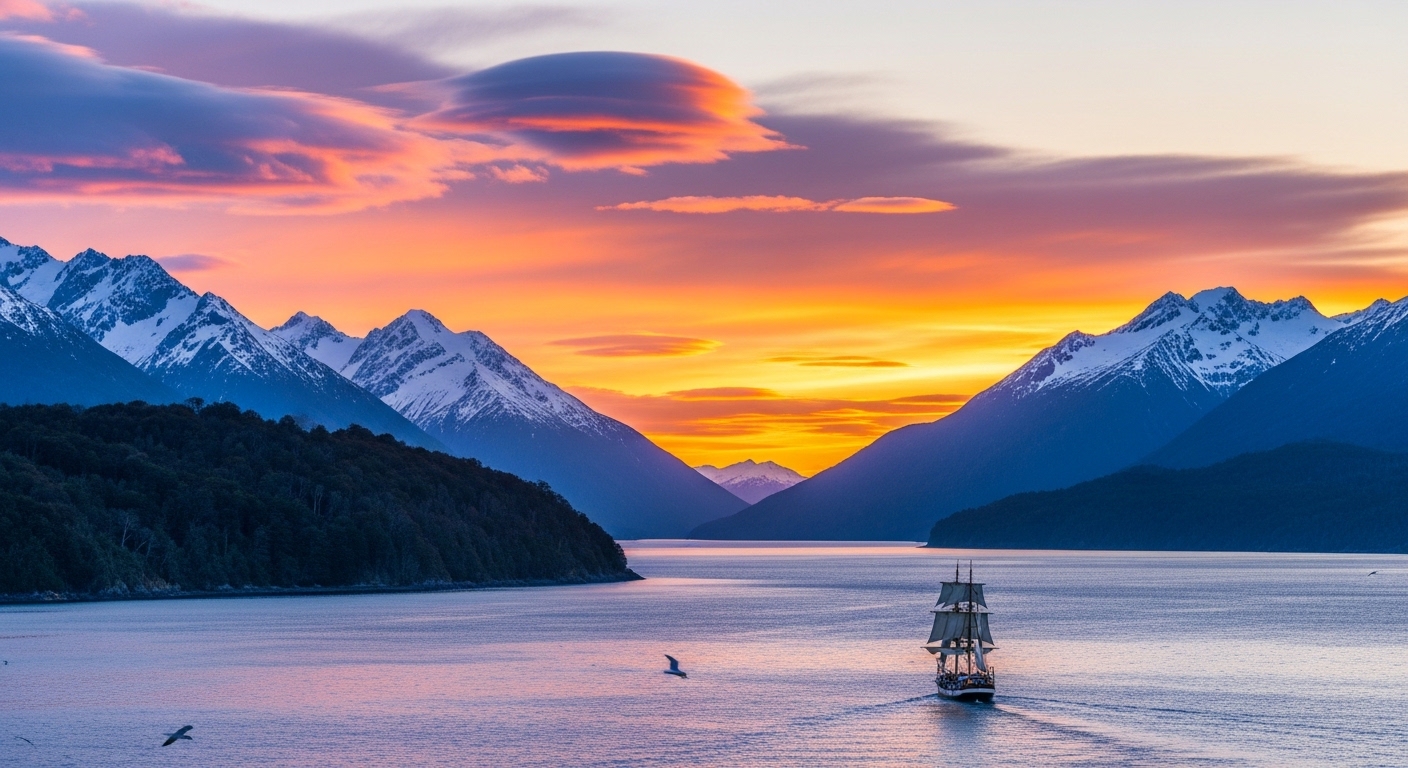
The Magellan Strait stands as one of the most remarkable and historically significant waterways on the entire planet. Furthermore, this dramatic natural passage cuts through the southern tip of South America, connecting two of Earth’s greatest oceans. Indeed, explorers, sailors, and geographers have long regarded it as a defining landmark of human discovery and maritime ambition.
What Is the Magellan Strait?
The Magellan Strait is a natural navigable passage located at the southern end of mainland South America. Moreover, it separates the South American continent from the archipelago of Tierra del Fuego to the south. Specifically, it stretches approximately 570 kilometers in length, linking the Atlantic Ocean on the east to the Pacific Ocean on the west.
Geographic Location and Boundaries
Chile controls the entire strait and governs navigation rights through this critical waterway today. Additionally, the passage runs between 52 and 55 degrees south latitude, placing it within one of the world’s most remote and windswept regions. Therefore, travelers and ships entering the strait immediately encounter rugged cliffs, glacial landscapes, and unpredictable weather patterns.
The Discovery of the Strait: Ferdinand Magellan’s Historic Voyage
Ferdinand Magellan, a Portuguese explorer sailing under the Spanish crown, first navigated this passage in October 1520. Consequently, his successful transit became one of the greatest achievements in the entire history of maritime exploration. Furthermore, Magellan spent thirty-eight days carefully navigating the treacherous channels before finally reaching the Pacific Ocean.
The Challenge Magellan Faced
Magellan and his crew encountered violent storms, mutinies among crew members, and deeply uncertain conditions throughout the journey. Nevertheless, he pressed forward with extraordinary determination and navigational skill under extremely difficult circumstances. As a result, European powers gained their first reliable route connecting the Atlantic and Pacific Oceans.
Why Magellan Chose This Route
Prior to his voyage, Europeans had no confirmed sea route around the bottom of South America at all. Therefore, Magellan sought a passage that would allow Spain to reach the Spice Islands without crossing Portuguese-controlled waters. Consequently, the discovery of this strait reshaped global trade routes and European colonial ambitions almost immediately.
Physical Geography of the Strait
The strait winds through complex terrain shaped by glaciers, mountains, and ancient geological forces over millions of years. Moreover, its width varies considerably — narrowing to as little as 3.2 kilometers at some points along its length. In addition, deep waters, strong currents, and shifting winds make navigation challenging even for modern vessels with advanced technology.
Surrounding Landscape and Terrain
Towering snow-capped peaks frame the strait on both the northern and southern sides throughout much of its length. Furthermore, glaciers descend directly into the cold water, creating dramatic blue-white walls that reflect beautifully in the calm channels. Additionally, dense subantarctic forests cling to the hillsides in many sections, adding striking greenery to the icy landscape.
Climate Conditions Along the Passage
The region experiences fierce winds, heavy rainfall, and sudden weather changes that challenge even experienced modern sailors. However, the strait still offers a more sheltered route compared to the notoriously dangerous waters around Cape Horn. In contrast, Cape Horn exposes ships to the full fury of the Southern Ocean without any landmass protection at all.
The Strait’s Role in Global Maritime History
For nearly four centuries after Magellan’s transit, this waterway served as the primary southern sea route for global commerce. Moreover, European empires relied on it heavily for trade with Asia and the western coast of the Americas. As a result, numerous historic naval battles, exploration expeditions, and trade convoys passed through its waters over time.
The Age of Sail and Commercial Traffic
During the eighteenth and nineteenth centuries, hundreds of sailing ships made the difficult journey through the strait each year. Furthermore, the discovery of gold in California in 1848 dramatically increased traffic as ships rushed toward the American West Coast. Consequently, the strait became one of the busiest and most commercially vital passages in the entire world.
The Opening of the Panama Canal
The Panama Canal opened in 1914 and immediately reduced the strategic importance of the Magellan route for global shipping. Nevertheless, large vessels that exceed the canal’s dimensions still use the strait as their only viable alternative passage. Therefore, the waterway continues to hold significant relevance for modern maritime trade and naval operations today.
Wildlife and Natural Environment
The strait supports an extraordinarily rich and diverse ecosystem shaped by cold, nutrient-rich waters from the Southern Ocean. Furthermore, the surrounding land and sea teem with wildlife that draws scientists, photographers, and nature travelers from worldwide. Indeed, few places on Earth offer such dramatic encounters between raw natural beauty and historical significance.
Marine Life in the Strait
Whales, dolphins, sea lions, and fur seals regularly inhabit the cold waters moving through the strait’s channels. Moreover, orcas hunt in the narrow passages, taking advantage of strong currents that concentrate fish and smaller marine mammals. Additionally, the seafloor supports diverse communities of invertebrates, kelp forests, and cold-water coral formations rarely seen elsewhere.
Bird Species and Wildlife on Shore
Magellanic penguins, condors, albatrosses, and numerous seabird species nest along the rocky shores and islands nearby. Furthermore, guanacos — relatives of the llama — roam the windswept grasslands of Patagonia that border the northern shores. As a result, wildlife watching near the strait offers experiences that rival any nature destination in South America.
Punta Arenas: The Gateway City
Punta Arenas, the capital of Chile’s Magallanes Region, sits directly on the northern shore of the strait. Moreover, this fascinating city serves as the primary departure point for ships, researchers, and tourists exploring the region. Additionally, it holds the distinction of being one of the southernmost cities in the entire world.
History and Culture of Punta Arenas
Founded in 1848, Punta Arenas grew rapidly as a refueling and supply stop for ships transiting the strait. Furthermore, waves of European immigrants — particularly from Croatia, Britain, and Spain — shaped the city’s unique cultural identity. Consequently, visitors today discover an intriguing blend of frontier heritage and cosmopolitan character in the city’s architecture and cuisine.
Tourism and Modern Visitors
Today, thousands of tourists visit Punta Arenas annually to explore the strait and the broader Patagonian wilderness. Moreover, luxury cruise ships regularly sail through the passage, giving passengers stunning views of glaciers and mountains. In addition, guided kayaking expeditions, wildlife tours, and historical heritage walks draw adventurous travelers throughout the year.
Geopolitical Significance of the Strait
Chile has maintained full sovereignty over the strait since the Boundary Treaty of 1881 between Chile and Argentina. Furthermore, international agreements guarantee freedom of navigation for all nations through this critical passage. Consequently, the strait continues to hold strategic importance for naval powers and commercial shipping interests worldwide.
Historical Territorial Disputes
Argentina and Chile disputed control over southern territories including waterways and islands for many decades after independence. However, diplomatic negotiations and international arbitration eventually resolved the most contentious boundary disagreements between both nations. As a result, both countries maintain peaceful relations and jointly benefit from the region’s growing tourism and resource economies.
Military and Strategic Importance
During both World War I and World War II, the strait held significant military value for naval operations. Moreover, controlling access to this passage meant controlling movement between the Atlantic and Pacific Oceans in the Southern Hemisphere. Therefore, Chilean naval forces have historically maintained strong patrols and oversight of all military vessel movements.
Scientific Research in the Region
Researchers from around the world travel to the strait to study glaciology, marine biology, climatology, and oceanography. Furthermore, the region’s isolation and relatively undisturbed ecosystems make it an exceptionally valuable natural laboratory. Consequently, scientific institutions in Chile, the United States, and Europe maintain ongoing research programs in the area.
Glacial Research and Climate Change
Glaciers near the strait show measurable retreat linked to global warming, making them important indicators of climate change. Moreover, scientists track these changes carefully because glacial melt affects sea levels and local marine ecosystems significantly. In addition, the region offers insights into past climate conditions through ice cores and sediment samples extracted from the seafloor.
Oceanographic Studies
The mixing of Atlantic and Pacific waters within the strait creates unique oceanographic conditions that researchers find deeply compelling. Furthermore, strong tidal currents and temperature gradients support biological communities that do not exist in nearby open ocean environments. Therefore, the strait functions as a natural experiment in marine ecology that scientists continue to study with great enthusiasm.
Final Thoughts
The Magellan Strait represents far more than a simple channel of water connecting two oceans on a map. Moreover, it embodies centuries of human courage, geographic wonder, ecological richness, and geopolitical drama all in one extraordinary place. Ultimately, whether you approach it as a historian, a nature lover, a sailor, or a curious traveler, this magnificent waterway never fails to inspire deep and lasting awe.