
 By Kathryn Roqueeto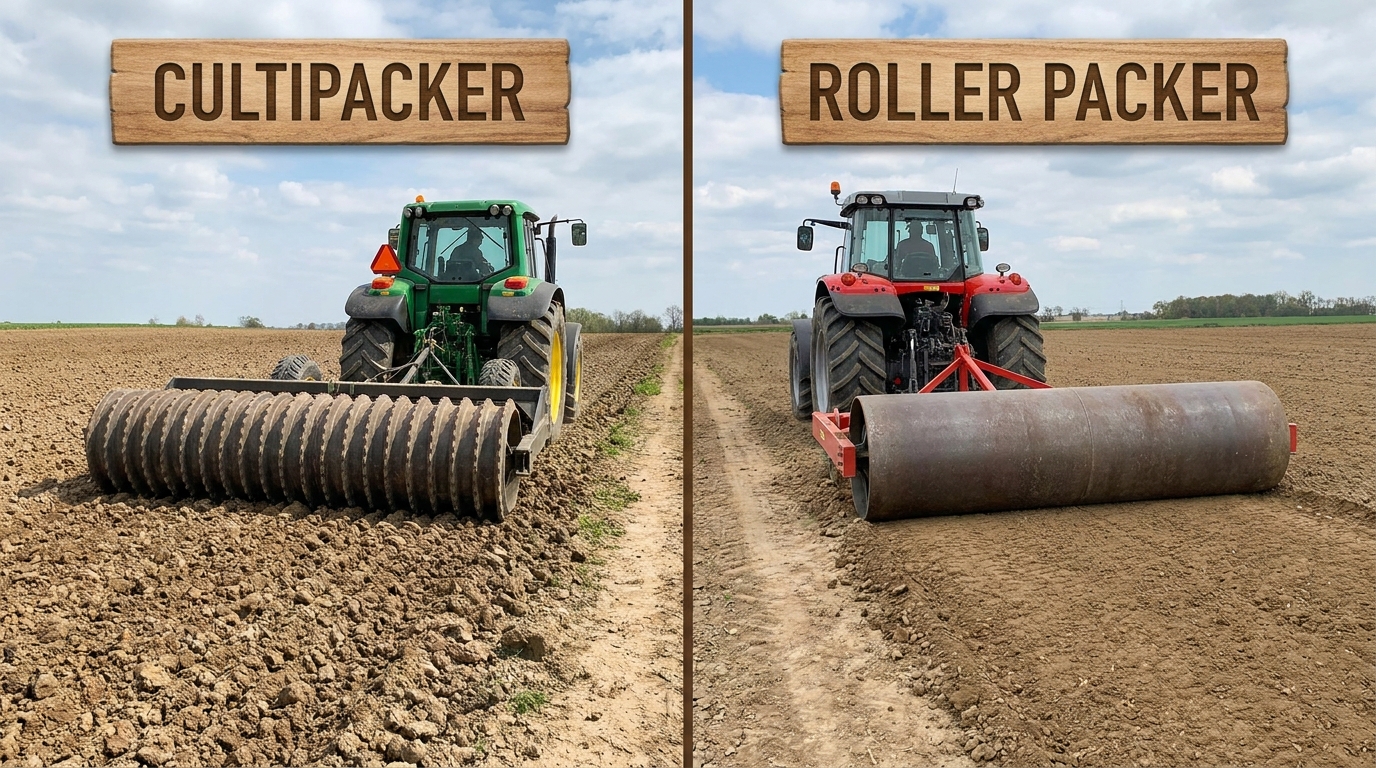
Introduction
Farmers constantly debate the cultipacker vs roller packer question when choosing the right seedbed preparation tool. Both implements shape and firm the soil, yet they serve distinctly different purposes on the farm. Understanding these differences helps you make smarter, more informed equipment investments for your land. Furthermore, the right choice can dramatically improve your seed germination rates and overall crop yields. Many farmers confuse these two tools, but each one delivers unique benefits depending on your specific soil type and crop goals.
What Is a Cultipacker?
A cultipacker features a series of heavy, ridged cast-iron or steel wheels that press firmly into the soil. These corrugated wheels crush clods and firm the seedbed to maximize seed-to-soil contact before planting. Additionally, the ridges create small furrows that hold tiny seeds in place during planting operations. Farmers typically pull a cultipacker after disking or harrowing to finish the seedbed preparation effectively. Moreover, this implement works especially well in loose, cloddy soils that need thorough firming before direct seeding begins.
How a Cultipacker Works
The ridged wheels roll across the soil and apply concentrated downward pressure at each distinct contact point. This action breaks up surface clods and presses out damaging air pockets from the upper soil layer. Furthermore, the alternating ridges create a slightly wavy surface that reduces seed bounce and water runoff. Most cultipackers run at relatively slow speeds to maximize their firming and clod-crushing effectiveness on the field. Therefore, farmers should always match their tractor speed carefully to the soil conditions for the best final results.
Best Uses for a Cultipacker
A cultipacker excels at preparing seedbeds for small-seeded crops like alfalfa, clover, and various grass species. It also significantly improves germination for vegetable crops by creating firm, uniform soil contact throughout the field. In addition, many farmers run a cultipacker both before and after seeding to press seeds snugly into the soil. This tool particularly shines in fields with heavy clay soils that tend to form large, stubborn clods. Consequently, the cultipacker remains a firm favorite among pasture and hay field establishment operations across North America.
What Is a Roller Packer?
A roller packer uses one or more large, smooth or lightly textured cylinders to firm and flatten the soil surface efficiently. Farmers use this implement primarily to press stones deeper into the soil and create a smooth, level seedbed. However, unlike its ridged counterpart, the roller packer applies broad, even pressure rather than concentrated, point-specific ridged pressure. This characteristic makes it especially useful for fields with numerous surface stones that could seriously damage harvesting equipment. Furthermore, roller packers come in various widths and weights to suit different farm sizes, soil types, and operating conditions.
How a Roller Packer Works
The heavy cylinders roll smoothly across the soil surface and apply consistent, uniform pressure across the entire working width. This action firms the top few inches of soil and eliminates large, problematic air voids left after tillage. Additionally, the weight of the roller consolidates loose topsoil after tillage and creates excellent seed-to-soil contact for planting. Many roller packers include a ballast tank so farmers can add water to increase the pressing weight as needed. Therefore, operators can easily adjust the implement’s effectiveness based on their specific soil firmness requirements and crop goals.
Best Uses for a Roller Packer
A roller packer works best in fields with light, sandy, or recently tilled soils that need broad, overall firming. It also helps farmers effectively manage rocky fields by pushing surface stones below the cutting height of harvesting equipment. Moreover, growers use roller packers extensively in small grain production to improve seedbed uniformity before drilling seeds. This tool delivers excellent results when working in fields after deep tillage has left the soil overly loose and uneven. Consequently, roller packers play a significant role in reducing soil erosion on sloped or wind-exposed agricultural fields everywhere.
Key Differences Between the Two Implements
These two implements differ in their wheel or cylinder design, their soil-contact patterns, and their primary functions on the farm. A cultipacker creates a ridged, textured surface while a roller packer leaves a smooth, flat, consistent finish. However, both tools improve seedbed quality by firming loose soil and enhancing seed-to-soil contact for better germination. The cultipacker targets clod breaking and small-seed placement while the roller packer focuses on overall soil leveling and stone pressing. Therefore, your soil type, crop type, and current field conditions should always guide your decision between these two implements.
Surface Texture Comparison
The cultipacker intentionally leaves a corrugated surface pattern that traps small seeds and reduces surface water runoff. In contrast, the roller packer leaves a flat, smooth surface that promotes uniform water infiltration and easy mechanical operations. Additionally, the textured surface from a cultipacker warms faster in spring, giving early-season crops a meaningful head start. The smooth finish from a roller packer, on the other hand, makes harvesting operations cleaner and more fuel-efficient across the field. Consequently, your crop type and harvest method should heavily influence which surface finish you actually need.
Weight and Pressure Distribution
A cultipacker concentrates its weight across individual ridged wheels that press deeply into the soil at each contact point. A roller packer, however, distributes its weight evenly across a long, smooth cylinder for broad-surface firming instead. Moreover, the cultipacker’s ridged design requires more draft power from your tractor compared to a similarly weighted roller packer. Therefore, farmers with lower-horsepower tractors often find the roller packer a more practical and fuel-efficient choice for their operations. Nevertheless, the cultipacker’s focused pressure delivers superior clod-breaking performance that a roller packer simply cannot match.
Which One Should You Choose?
Choose a cultipacker when you grow small-seeded forage crops, struggle with cloddy soils, or need a finely textured seedbed. On the other hand, choose a roller packer when you manage stony fields, grow small grains, or need even surface firming. Additionally, some experienced farmers own both implements and use them strategically for different tasks throughout the growing season. Your local soil conditions, crop rotation plan, and available budget will ultimately determine the most practical choice for your operation. Nevertheless, either tool can significantly improve your planting success when you match it correctly to the right field conditions.
Maintenance Tips for Both Implements
Both implements require regular inspection and maintenance to perform at their best throughout the demanding growing season. Grease all bearings on the cultipacker’s wheel axles after every 8 to 10 hours of field operation. Furthermore, inspect the roller packer’s cylinder for dents, cracks, or flat spots that could create uneven soil firming across the field. Additionally, clean soil and crop residue from both implements after each use to prevent rust and premature wear. Therefore, a simple maintenance routine extends the working life of both tools and protects your equipment investment effectively.
Final Thoughts
Both the cultipacker and the roller packer offer real, measurable benefits to farmers who understand how to use them correctly. Choosing the right implement always depends on your specific soil conditions, crop types, and field management goals for the season. Furthermore, investing in quality seedbed preparation consistently pays off through better germination rates and stronger, more uniform crop stands. Talk to your local equipment dealer or agronomist to find the best fit for your particular farming operation and soil type. Ultimately, a well-prepared seedbed gives every seed the best possible chance to germinate successfully and produce a strong, productive crop.