
 By Kathryn Roqueeto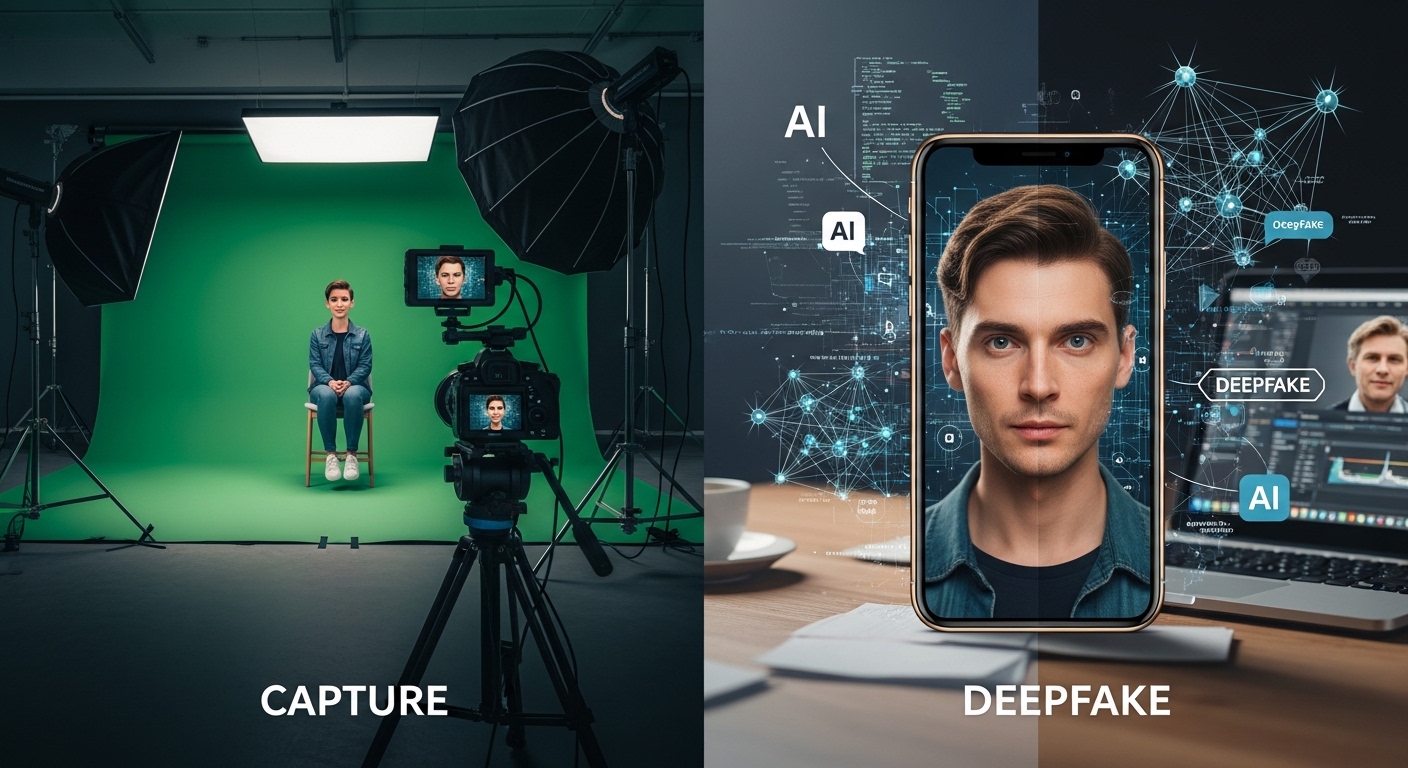
Introduction
Deepfake photo makers are fundamentally transforming how creators, brands, and individuals produce and consume visual content today. Furthermore, these AI-powered tools generate hyper-realistic synthetic images that blur the boundary between authentic photography and machine-created fiction. Many creative professionals now integrate deepfake photo makers into their workflows because the technology delivers speed, flexibility, and visual possibilities. Therefore, understanding how these tools work, where they add genuine value, and where they create serious risks becomes essential for everyone. Additionally, the rapid advancement of this technology demands informed engagement from creators, consumers, policymakers, and anyone who interacts with digital imagery regularly.
What Are Deepfake Photo Makers
Defining the Technology
Deepfake photo makers use artificial intelligence algorithms to generate, alter, or synthesize realistic human faces and visual scenes. Furthermore, these tools draw on deep learning architectures that train on enormous datasets of real photographic images. Therefore, the resulting outputs carry a visual realism that previous image manipulation software could never achieve at comparable speed. Moreover, the term deepfake combines “deep learning” and “fake,” directly describing the technical process behind the visual output. Additionally, modern deepfake photo tools operate through accessible web interfaces that require no technical expertise from end users whatsoever.
How They Differ From Traditional Photo Editing
Traditional photo editing tools like Photoshop require human skill, time, and deliberate manual manipulation of existing images. Furthermore, deepfake photo makers instead generate or transform images algorithmically, often producing results in seconds rather than hours. Therefore, the skill barrier that previously limited sophisticated image manipulation to trained professionals essentially disappears with these tools. Moreover, traditional editing modifies existing photographs while deepfake systems can synthesize entirely new faces, expressions, and scenes. Consequently, the creative and deceptive possibilities of deepfake technology vastly exceed what conventional photo editing software makes possible.
The Types of Tools Available
The deepfake photo tool landscape includes face-swapping applications, age progression tools, expression transfer systems, and full face synthesis platforms. Furthermore, some tools focus specifically on generating photorealistic portraits of people who do not actually exist in reality. Therefore, each tool category serves distinct creative purposes while sharing the underlying AI architecture that drives realistic outputs. Moreover, consumer-facing applications bring this technology to smartphones, while professional platforms offer more sophisticated controls for serious creators. Additionally, open-source frameworks give technically capable developers the ability to build customized deepfake systems for specialized applications.
The Technology Behind Deepfake Photo Makers
Generative Adversarial Networks Explained
Most deepfake photo systems rely on Generative Adversarial Networks, commonly known as GANs, as their core architecture. Furthermore, GANs pit two neural networks against each other where one generates images and the other evaluates their realism. Therefore, this competitive dynamic drives continuous improvement until the generator produces images that fool the discriminator network consistently. Moreover, the training process requires massive computational resources and enormous photographic datasets to achieve convincing realistic results. Consequently, the quality of deepfake outputs reflects the scale and diversity of the training data that developers feed into these systems.
Diffusion Models and Their Role
Beyond GANs, diffusion models represent a newer and increasingly dominant architecture within AI image generation systems. Furthermore, diffusion models generate images by gradually removing noise from random data until a coherent realistic image emerges. Therefore, this approach often produces sharper, more detailed, and more controllable outputs compared to older GAN-based systems. Moreover, tools built on diffusion architecture allow users to guide outputs through text descriptions and reference images simultaneously. Additionally, the rapidly improving quality of diffusion-based deepfake systems accelerates the visual realism that these tools deliver to everyday users.
Training Data and Its Implications
The photographic training data that developers use shapes both the capabilities and the biases of deepfake photo systems. Furthermore, models trained predominantly on certain demographic groups perform less accurately when generating or manipulating faces from underrepresented populations. Therefore, the diversity of training datasets directly influences both the technical performance and the ethical fairness of these tools. Moreover, questions about consent arise when developers train AI systems on photographs collected without explicit permission from depicted individuals. Consequently, training data practices represent one of the most contentious ethical dimensions of the entire deepfake technology development process.
Creative Applications in Content Creation
Advertising and Commercial Photography
Marketing teams now use deepfake photo technology to create diverse model imagery without expensive multi-day photo productions. Furthermore, brands generate dozens of product lifestyle images featuring various demographic representations through AI synthesis rather than physical shoots. Therefore, the cost and time savings from AI-generated commercial imagery fundamentally change advertising production economics and timelines. Moreover, small businesses without large photography budgets gain access to professional-quality visual content that previously required significant financial investment. Consequently, deepfake photo tools democratize commercial visual content creation in ways that expand market participation significantly.
Film and Entertainment Industry Applications
The entertainment industry uses deepfake photo technology for de-aging actors, recreating deceased performers, and reducing makeup costs. Furthermore, visual effects teams apply these tools to achieve continuity corrections and performance enhancements in post-production workflows. Therefore, directors and producers gain creative flexibility that previously required either impossible logistics or prohibitively expensive practical effects. Moreover, streaming platforms use AI face synthesis for localization purposes, creating lip-synchronized versions of content for international markets. Additionally, the film industry’s high-profile adoption of this technology provides mainstream visibility that normalizes AI-generated faces across popular culture broadly.
Fashion and Virtual Try-On Experiences
Fashion brands deploy deepfake photo systems to create virtual try-on experiences that help customers visualize products before purchasing. Furthermore, these systems generate realistic images of customers wearing specific garments without requiring physical inventory or studio photography. Therefore, online clothing retailers reduce return rates by helping shoppers make more confident and informed purchase decisions. Moreover, the fashion industry uses AI face and body synthesis to create lookbook imagery that serves global markets simultaneously. Consequently, the retail application of deepfake photo technology delivers measurable commercial value that drives significant investment in continued development.
Game Development and Virtual Worlds
Game developers use deepfake photo technology to generate photorealistic non-player characters with diverse and believable appearances. Furthermore, AI face synthesis allows smaller development teams to populate virtual worlds with visual variety previously requiring enormous artistic resources. Therefore, independent game studios access character creation capabilities that previously remained exclusive to well-funded major development studios. Moreover, metaverse platforms use similar technology to generate personalized avatars that realistically represent users within virtual social environments. Additionally, the gaming industry’s appetite for visual realism drives continued investment in deepfake photo quality that benefits creative applications broadly.
Journalism and Documentary Visual Storytelling
Some documentary filmmakers and journalists use AI face generation to protect the identities of vulnerable sources and subjects. Furthermore, replacing real faces with AI-generated equivalents allows important stories to reach audiences without endangering real individuals. Therefore, deepfake photo technology serves a genuine protective function in contexts where visual anonymization becomes ethically necessary. Moreover, historical documentary productions use AI face synthesis to create more engaging visual representations of events lacking photographic records. Consequently, thoughtfully applied AI visual tools expand journalism’s ability to tell important stories while managing real human risks.
The Ethical Landscape of Deepfake Photo Technology
Non-Consensual Image Creation
The most serious ethical violation associated with deepfake photo tools involves creating realistic images of real people without consent. Furthermore, malicious actors use these tools to generate false images that damage reputations, enable harassment, and cause profound psychological harm. Therefore, the same technology that empowers legitimate creators simultaneously provides weaponizable tools to those with harmful intentions. Moreover, victims of non-consensual deepfake image creation face serious challenges pursuing legal remedies in many jurisdictions globally. Consequently, the harm potential of accessible deepfake photo tools creates urgent demands for stronger legal frameworks and platform accountability measures.
Political Manipulation and Disinformation
Political actors can use deepfake photo technology to create fabricated visual evidence that supports false narratives. Furthermore, realistic fake images of politicians, public figures, and world events circulate on social media faster than fact-checkers can respond. Therefore, the disinformation potential of deepfake photo tools threatens democratic processes and informed public discourse simultaneously. Moreover, authoritarian governments can deploy this technology to manufacture visual evidence that justifies political persecution and oppression. Additionally, the growing technical sophistication of deepfake outputs makes visual verification increasingly difficult even for trained media professionals.
Identity Theft and Financial Fraud
Criminals deploy deepfake photo technology to create convincing false identities that bypass biometric verification systems. Furthermore, AI-generated face images fool identity verification platforms that businesses use to onboard customers and prevent fraud. Therefore, financial institutions face new categories of fraud risk that traditional security frameworks never anticipated or addressed. Moreover, synthetic identity fraud using AI-generated faces causes significant financial losses across banking, insurance, and e-commerce sectors. Consequently, the security industry races to develop deepfake detection capabilities that keep pace with the rapidly improving quality of generation tools.
Psychological and Social Harm
Individuals who discover realistic fake images of themselves online experience significant psychological distress and lasting social consequences. Furthermore, the violation of seeing one’s face on synthetic imagery without consent creates profound feelings of helplessness and vulnerability. Therefore, the psychological harm of deepfake photo abuse deserves serious consideration alongside the more visible political and financial risks. Moreover, young people and public figures face disproportionately high risks from deepfake photo harassment campaigns. Additionally, the social normalization of manipulated imagery erodes the baseline trust in visual evidence that healthy societies depend upon fundamentally.
Legal Frameworks Addressing Deepfake Technology
Existing Laws and Their Limitations
Most jurisdictions lack specific legislation addressing deepfake photo creation and distribution in comprehensive ways. Furthermore, prosecutors attempting to address deepfake harms currently rely on existing laws covering defamation, harassment, and intellectual property infringement. Therefore, legal frameworks designed before AI-generated imagery existed often fit the new reality poorly and leave significant gaps. Moreover, proving harm and establishing causation in deepfake cases presents technical and evidentiary challenges that overwhelm conventional legal processes. Consequently, the legal system’s lag behind technological capability leaves victims of deepfake abuse with inadequate protection and limited remedies.
Emerging Legislation Around the World
Several countries and states now actively develop specific legislation targeting malicious deepfake photo creation and distribution. Furthermore, the European Union’s AI Act includes provisions addressing synthetic media that impose obligations on developers and platforms. Therefore, regulatory momentum is building toward more specific and enforceable legal protections against deepfake abuses. Moreover, some jurisdictions specifically criminalize non-consensual intimate deepfake imagery, recognizing it as a distinct and serious category of harm. Additionally, legislative efforts in the United States include both federal proposals and state-level laws that address specific deepfake harm categories.
Platform Responsibility and Content Moderation
Social media platforms bear significant responsibility for preventing the spread of harmful deepfake imagery across their networks. Furthermore, platforms increasingly deploy AI detection tools that identify and remove synthetic imagery violating community standards. Therefore, the effectiveness of platform moderation directly determines how much harm deepfake photo abuse actually causes at scale. Moreover, inconsistent enforcement across different platforms creates loopholes that bad actors exploit to reach large audiences despite partial restrictions. Consequently, coordinated cross-platform approaches to deepfake content moderation deliver more effective protection than fragmented individual platform policies.
Detecting Deepfake Photos
Technical Detection Methods
Researchers actively develop AI-powered detection systems that identify characteristic artifacts in deepfake-generated imagery. Furthermore, detection models examine pixel patterns, lighting inconsistencies, facial geometry anomalies, and compression artifacts that generation systems leave. Therefore, a growing detection technology ecosystem provides tools that journalists, platforms, and individuals can deploy against disinformation. Moreover, some detection approaches analyze metadata and provenance information rather than pixel-level content analysis alone. Additionally, browser plugins and standalone applications now bring deepfake detection capabilities directly to everyday internet users without technical expertise.
The Detection Arms Race
Detection technology development triggers improvements in generation quality that make subsequent detection more difficult. Furthermore, this iterative dynamic creates a technological arms race where advances in generation and detection push each other forward continuously. Therefore, no detection system achieves permanent reliability against generation tools that developers specifically optimize to evade detection. Moreover, the detection arms race demands ongoing research investment that academia, government, and private industry must collectively sustain. Consequently, treating deepfake detection as a solved problem proves dangerously naive given the pace of generation technology improvement.
Human Behavioral Indicators
Beyond technical detection, developing human skills for evaluating visual content critically provides important complementary protection. Furthermore, training people to question unexpected images, verify sources, and consult multiple references before accepting visual claims builds societal resilience. Therefore, media literacy education represents a vital non-technical defense against the disinformation potential of deepfake photo technology. Moreover, teaching critical visual consumption habits in schools prepares young people for an information environment where synthetic imagery becomes increasingly common. Consequently, combining technical detection tools with widespread media literacy creates a more robust defense than either approach achieves independently.
Deepfake Photo Makers and Creative Professionals
Opportunities for Photographers and Visual Artists
Photographers and visual artists find in deepfake photo technology both a competitive threat and a powerful creative tool. Furthermore, AI-assisted image creation allows photographers to explore visual concepts that physical shooting and traditional post-processing cannot realize. Therefore, creative professionals who embrace these tools expand their creative vocabulary rather than simply competing against automated alternatives. Moreover, using deepfake techniques as one element within a broader human-directed creative process produces results with genuine artistic intention. Additionally, photographers who understand AI image generation develop more sophisticated and in-demand creative services for commercial clients.
Workflow Integration for Content Creators
Content creators integrate deepfake photo tools into production workflows at various stages from concept visualization to final output. Furthermore, using AI-generated faces as placeholder imagery during design and layout stages speeds up production significantly. Therefore, content teams produce higher volumes of visual concepts for client review without incurring photography costs at exploratory stages. Moreover, social media managers use AI face generation to create diverse visual content that represents broad audiences more authentically. Consequently, thoughtful workflow integration of deepfake photo tools enhances creative productivity without replacing the human judgment that gives content genuine meaning.
The Question of Creative Authenticity
As AI-generated imagery becomes more prevalent, questions about creative authenticity and authorship grow more pressing. Furthermore, audiences increasingly want to know whether images they engage with reflect genuine human experience or algorithmic synthesis. Therefore, transparency about AI involvement in image creation becomes an ethical obligation rather than just a courtesy. Moreover, some creative communities develop explicit norms around labeling AI-generated content to preserve trust between creators and audiences. Additionally, the most respected creative professionals treat AI as a tool that serves human creative vision rather than a replacement for genuine artistic thinking.
The Future of Deepfake Photo Technology in Content Creation
Real-Time Generation and Interactive Applications
Processing advances now enable real-time deepfake photo generation that opens possibilities for live interactive content experiences. Furthermore, real-time face synthesis allows virtual presenters, interactive avatars, and live event applications that static generation cannot support. Therefore, the boundary between pre-produced synthetic imagery and live interactive AI-generated visual content rapidly dissolves. Moreover, gaming, education, customer service, and entertainment industries all develop applications exploiting real-time deepfake photo capabilities. Consequently, the technology’s evolution toward real-time operation dramatically expands the contexts where synthetic human imagery enters everyday life.
Personalization at Unprecedented Scale
Future deepfake photo systems will generate individually personalized visual content at scales that completely transform content marketing. Furthermore, brands will deliver unique AI-generated imagery tailored to each recipient’s demographic profile and personal preferences. Therefore, the era of one-size-fits-all visual content marketing will give way to hyper-personalized synthetic imagery experiences. Moreover, personalized deepfake photo content in education could create learning materials that feature relatable faces and familiar cultural contexts. Additionally, healthcare communication could use personalized synthetic imagery to improve patient engagement with health information and treatment plans.
Watermarking and Provenance Technologies
The content creation industry actively develops standardized watermarking and provenance systems that track image origins and modifications. Furthermore, organizations like the Content Authenticity Initiative develop technical standards that establish verifiable chains of custody for digital imagery. Therefore, future visual content ecosystems may include reliable authenticity signals that help consumers distinguish real photography from AI synthesis. Moreover, camera manufacturers embed cryptographic signatures at capture time that authentication systems verify throughout subsequent publication workflows. Consequently, technical provenance infrastructure promises to restore meaningful trust signals to a visual information environment that deepfake technology currently destabilizes.
Regulation Shaping Technology Development
Government regulation increasingly shapes how developers design, deploy, and restrict deepfake photo generation systems. Furthermore, mandatory disclosure requirements, prohibited use categories, and platform liability rules all influence technology development priorities. Therefore, the regulatory environment that emerges over the next decade will define the boundaries within which deepfake technology operates commercially. Moreover, international regulatory coordination prevents the jurisdiction shopping that allows harmful applications to migrate toward permissive legal environments. Consequently, thoughtful regulation that balances creative freedom against harm prevention will ultimately determine whether deepfake photo technology serves humanity’s creative potential or undermines it.
Responsible Use Guidelines for Deepfake Photo Makers
Consent as a Non-Negotiable Foundation
Using deepfake photo tools to create imagery of real people without their explicit informed consent crosses a fundamental ethical line. Furthermore, obtaining clear consent before generating or distributing AI-altered images of any real individual represents the minimum ethical standard. Therefore, responsible creators treat consent as a non-negotiable foundation rather than an optional consideration within their creative practice. Moreover, consent requirements become especially critical when generated imagery could cause reputational, emotional, or professional harm to the depicted individual. Consequently, building consent practices into deepfake photo workflows from the beginning prevents ethical violations that cause serious and sometimes irreversible harm.
Transparency and Disclosure
Creators who use deepfake photo technology should disclose AI involvement clearly and prominently in all distributed content. Furthermore, audiences deserve accurate information about the nature of imagery they consume, share, and form opinions based upon. Therefore, transparent labeling of AI-generated or AI-altered imagery represents a basic obligation that responsible creators embrace without reluctance. Moreover, disclosure norms established by respected creators set standards that eventually influence platform policies and legal requirements. Additionally, proactive transparency about AI tool use builds audience trust that becomes a genuine competitive advantage over time.
Focusing on Constructive Applications
Responsible deepfake photo use concentrates creative energy on applications that deliver genuine value without creating harm. Furthermore, entertainment, artistic exploration, historical visualization, and accessibility represent application areas with strong ethical foundations. Therefore, creators who focus their deepfake photo work within clearly constructive purposes maintain both ethical integrity and professional credibility. Moreover, avoiding applications that involve real people without consent automatically eliminates the largest categories of deepfake-related harm. Consequently, creative professionals who establish clear personal guidelines around deepfake photo use protect both their subjects and their own professional reputations simultaneously.
Conclusion
Deepfake photo makers represent one of the most transformative and genuinely double-edged technological developments in the history of visual content creation. Furthermore, the creative possibilities they unlock are matched in scale only by the ethical risks they introduce into public and private life. Therefore, navigating this technology responsibly requires informed engagement from creators, platforms, legislators, and everyday visual content consumers. Moreover, the future of deepfake photo technology will ultimately reflect the collective values and choices that society expresses through regulation, platform policy, and individual creative practice. Consequently, approaching this powerful tool with curiosity, ethical clarity, and genuine accountability ensures that it serves human creativity rather than undermining the visual truth that connected societies absolutely depend upon.